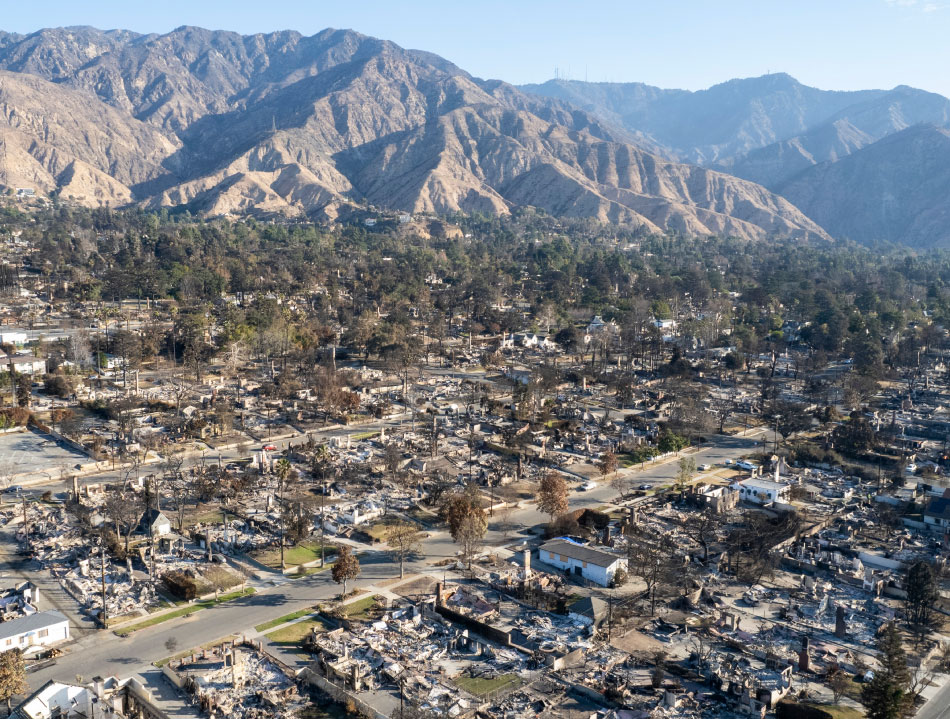
The 2025 LA fires burned roughly 57,000 acres, with the Eaton and Palisades fires alone destroying nearly 40,000 acres and 16,000 homes and businesses throughout neighborhoods in Los Angeles County in January 2025. Excessive dry vegetation and strong Santa Ana winds led to one of the largest urban wildfires in decades, affecting Altadena, Pasadena, the Pacific Palisades, and other towns.
Looking at the photographs and videos documenting the devastation, you may be wondering: Did any homes survive the Palisades and Eaton wildfires? The answer is yes, within the widespread acres of destruction, a very few houses defiantly remained.
Why didn’t some houses burn in the LA fires? As people face the decision to relocate or rebuild, getting answers is important. Homeowners and policymakers need to study why some structures were not destroyed for insights into rebuilding with fire resilience in mind. Climate trends, landscape options, and construction materials are just some of the considerations for the way forward.
The homes that defended themselves in the LA fires
Some homes withstood the California wildfires because of proactive, layered protection strategies. Take the Altadena home of Miles Loudermilk’s family, for example. They created a fire-resistant perimeter extending 30 feet from the house, removing dead vegetation, trimming trees, installing gravel beds, and keeping landscaping well-watered to ensure embers had no chance of igniting a fire.
Vardaan Vasisht went a step further by installing a Frontline roof-mounted sprinkler system, which he activated remotely as the fire approached. The same system helped a Malibu home survive, even as neighboring houses burned. A month earlier, a home with Frontline’s roof sprinklers was also able to successfully endure the Franklin fire.
Proactive choices, like building with fire-resistant materials, maintaining defensible space, and using Frontline wildfire sprinkler systems, can make the difference between losing a home and surviving a wildfire. During the 2025 LA fires, 59 homes activated their Frontline systems and were protected, demonstrating how preparation and the right tools can save lives and structures.
Why didn’t some houses burn in the LA fires?
The houses that survived the LA fires relied on wildfire protection strategies that prevented ignition. Proactive steps, like hardening homes with fire-resistant materials, creating defensible space, and installing exterior sprinkler systems, significantly increased their chances of survival.
Understanding wildfire dynamics is key. Direct flames rarely consume a house on contact. Instead, two forces can threaten structures: intense radiant heat, which can ignite flammable materials from a distance, and flying embers, which are by far the most common cause of home fires. Studies show that roughly 90% of homes lost during wildfires are set ablaze by wind-driven embers.
These smoldering fragments can lodge in roof vents, gutters, shingles, eaves, or any crack where flammable material exists, and with the right fuel, they can ignite and grow into a full fire. Removing these vulnerabilities is a crucial part of preparing a home to survive a wildfire.
The takeaway from the recent Los Angeles County fires is clear: home resilience matters. The houses that survived did so because homeowners combined multiple layers of protection, including structural hardening, defensible space, and active defense systems like Frontline wildfire sprinklers. This demonstrates that no single measure is enough, but together, they can make a home much more likely to endure a wildfire.
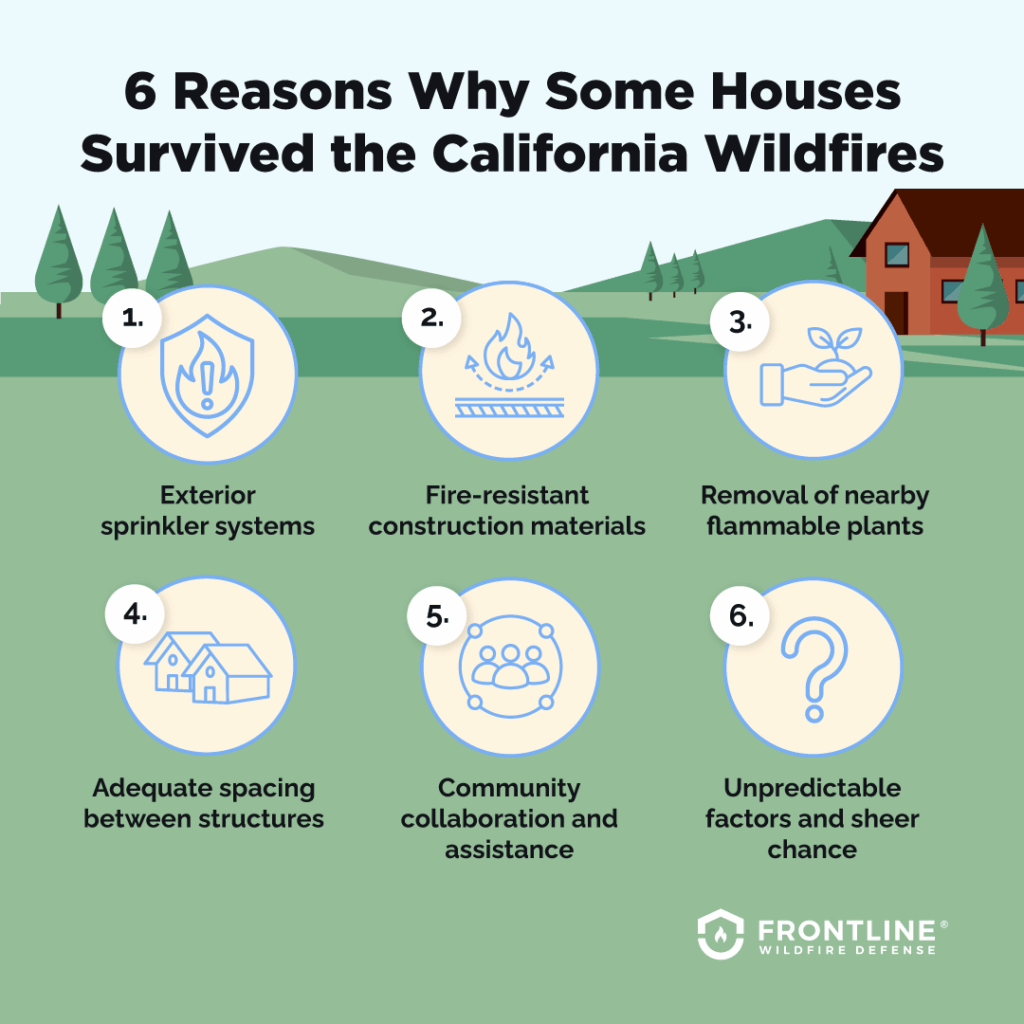
1. Installing wildfire-ready technology
With the right technology, homes can defend themselves when threatened by wildfires. Exterior wildfire sprinklers on rooftops, under eaves, and around the perimeter of a home prevent embers from igniting. Paired with sensors and remote-controlled activation capabilities, these systems protect structures without anyone having to be home or delaying their evacuation during an emergency. Other technologies include fire-resistant vent covers and heat-resistant windows.
2. Building with fire-resistant materials
When building or renovating, choose materials that do not readily burn. Metal roofing, brick, stucco, fiber cement siding, and cement decking will resist heat and flames. Fire-resistant insulation and intumescent paints can further fire-harden a home.
3. Clearing out surrounding vegetation
Remove potential fuel for wildfires with defensible landscaping. Remove vegetation from alongside your home, trim back trees, and remove as much brush as you can. Keeping a clear zone around your house will help keep flames from spreading to it. Consider concrete, gravel, and sand landscapes in the immediate area. Look for native, low-flammability plant species. While eucalyptus trees smell wonderful, they become flaming torches in fires due to their high oil content.
4. Maintaining space between buildings
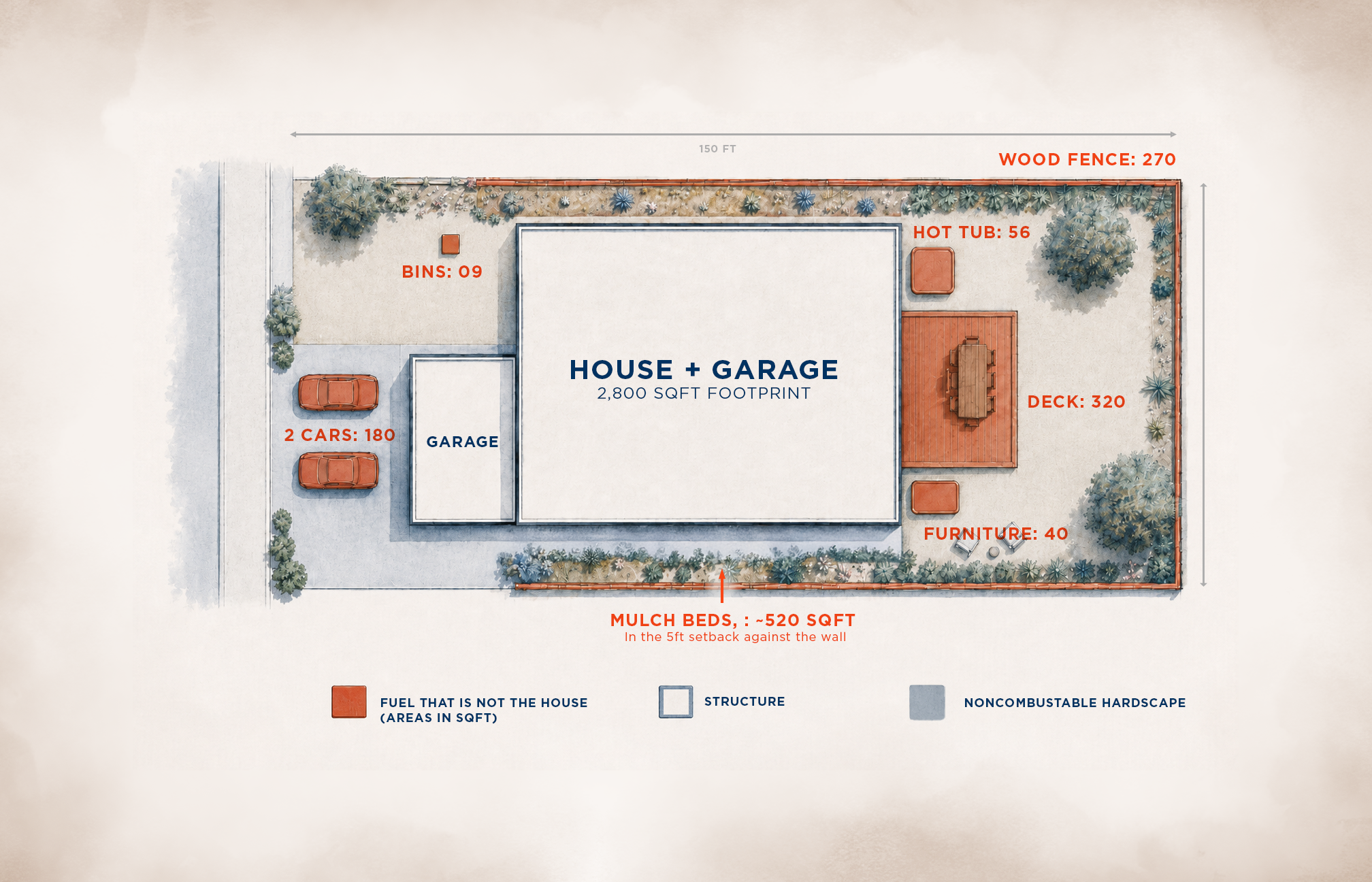
Space is one of the most effective defenses against wildfire. When homes and structures are close together, heat and embers can cause fire to spread from one to the next. Defensible space includes how sheds, fences, decks, and other structures are placed in relation to each other as well as how they are maintained. Whether it’s deciding how close to build a shed to your home or working with neighbors to prepare defenses as a community, every foot and every choice could reduce your wildfire risk.
5. Community effort and support
Your chances of saving your home are highest when everyone in your community works together to make their homes ember-resistant and fire-resilient. If many adjacent homes are renovated with the right materials, and residents practice defensible space landscaping and adopt protective technologies, the community as a whole becomes more resilient.
6. Chance and other factors
While many elements are within your control, others are not. A change in the direction of the wind, a decrease in humidity, and fluctuations of fire intensity all can affect the chances of your home surviving a wildfire. If things take a serious turn for the worse, fire can defeat even the strongest fire-resistance efforts. Taking a proactive approach and investing in protective measures will stack the odds in your favor.
Rebuilding in California with fire safety in mind
The fast-moving and widespread urban wildfires in LA demonstrated that even the best-equipped fire departments can be overwhelmed as flames spread. Homeowners rebuilding after the Los Angeles fires now have the opportunity to create fire-resilient homes designed to defend themselves and their belongings.
Homes that survived the recent wildfires show the power of layered defenses: fire-resistant materials, construction that prevents embers from lodging, ample defensible spaces, and active defense systems withlike exterior sprinklers. These measures work together to stop embers from igniting structures and give homes the best chance to withstand wildfire while neighborhoods recover more quickly.
Want to protect your home against the next wildfire? Frontline Wildfire Defense can help you design, install, and maintain active and passive solutions, like roof-mounted sprinkler systems, defensible perimeters, and fire-hardened construction, that truly make a difference when it matters most.
More from the Frontline Blog
All Posts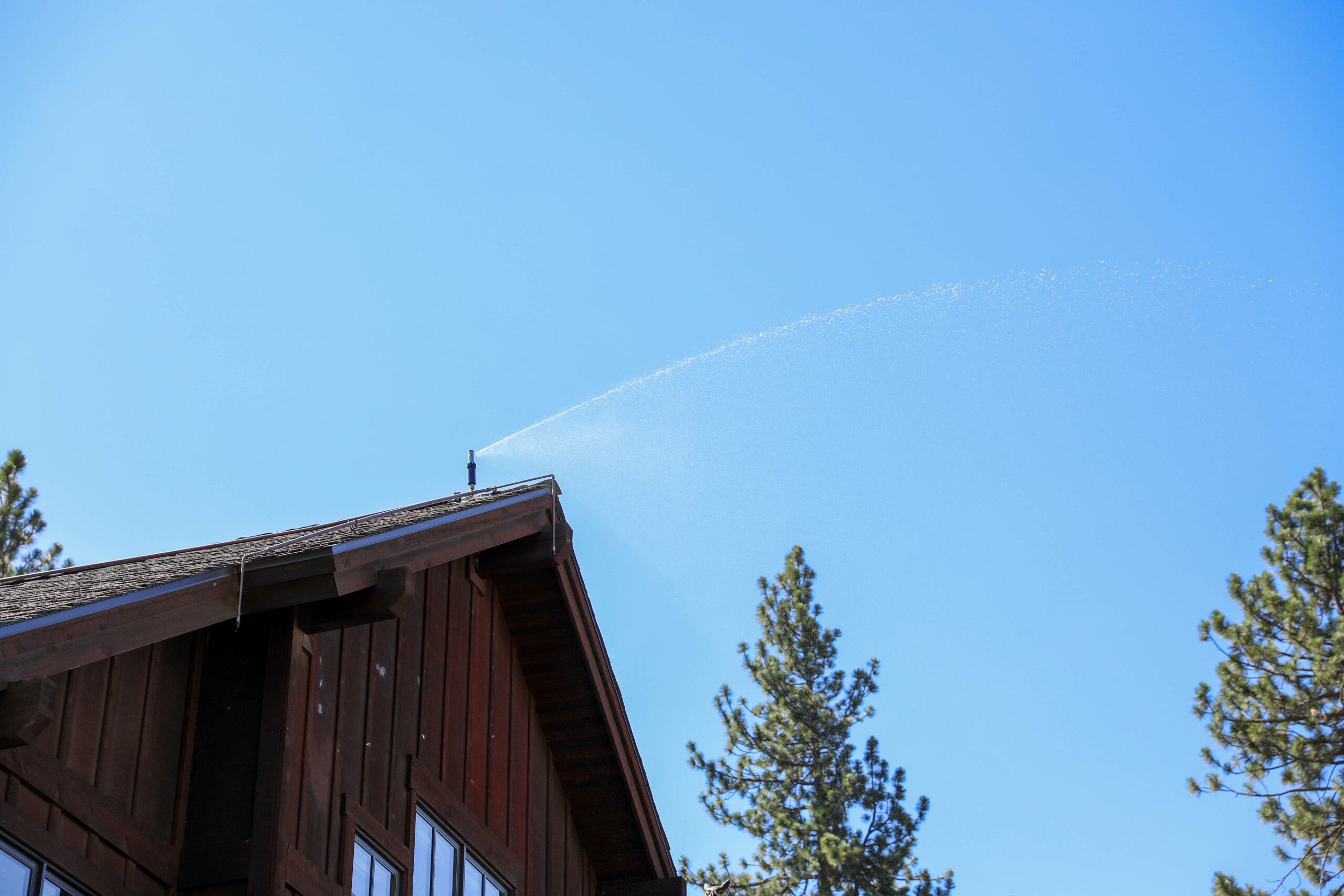
When living in a wildfire-prone region, protecting what matters most requires more than just standard preparation. Golden Bear Solar...
A Massive Gap in Passive Structure Hardening Virtually every wildfire expert agrees that wind-driven embers are the primary threat...
Every homeowner’s journey with Frontline begins with a conversation. For many, that conversation comes after experiencing a wildfire firsthand,...