Hidden Causes of Water Pressure Failures
The causes of water pressure failure during a wildfire vary, but the result is the same: Low water pressure limits the ability of firefighters to effectively control a wildfire when they’re needed the most.
Jump to a section:
- The hidden causes of water pressure failures during a wildfire
- How destroyed structures bleed the water grid
- Can fire hydrants run out of water during a wildfire?
- How mass wildfire ignitions overwhelm local fire departments
- Maintaining fire protection when water pressure drops during a wildfire
- Shifting from high-volume suppression to precision wildfire prevention
- Smart system controls: Water-saving zone cycling and low-volume foam adhesion
- Activating a backup water supply when municipal pressure fails
- Secure your property and support your community’s water supply
The hidden causes of water pressure failures during a wildfire
Water system failures during wildfires are rarely due to a single weakness in the system, such as a problem at a treatment plant. Instead, a series of connected events put water systems under unusual strain until they reach the point of failure.
Wildland-Urban Interface (WUI) community water systems are particularly vulnerable. The water grid can quickly collapse when a wildfire ignites multiple homes and businesses at the edges of developed areas. Firefighters create a sudden surge of water demand, drawing supply away from the rest of the community and causing water pressure to drop across the area.
Other factors beyond high demand can also affect water supply during a wildfire. Fire-induced power disruptions can shut down water pumps and pressure-regulating equipment. Aging infrastructure, leaks caused by fire damage, and system capacities that haven’t kept pace with growth can also contribute to declining water pressure.
HOW DESTROYED STRUCTURES BLEED THE WATER GRID
Water systems often fail from the outside in. When a wildfire burns a home, the heat can destroy the plumbing, service lines, and other water distribution infrastructure, creating leaks and pressure loss. Water mains can break or melt, allowing uncontrolled water to flow out.
Water grid failures during wildfires can happen when dozens or even hundreds of homes are destroyed at once. The combined leaks from the damaged water lines can quickly drain the system, reducing the amount of water available for firefighting efforts.
Homeowners who try to protect their properties with garden hoses further strain public water systems. People with basic rooftop sprinklers may activate them when they evacuate but then have no way to adjust or shut them off. These systems continuously draw water from an already stressed system.
Can fire hydrants run out of water during a wildfire?
Yes, fire hydrants can run completely dry during wildfires, particularly when wind-driven ember storms travel ahead of the main front and ignite many structures at once. City and town water systems are designed to serve residential users and handle occasional structure fires, not community-wide wildfire emergencies.
Local firefighters need to make strategic decisions about water use when trying to stay ahead of a fire. They send crews and equipment where they can have the greatest impact while making the best use of a limited water supply. Eventually, demand exceeds what the system can deliver, and hydrants can quickly run dry.
HOW MASS WILDFIRE IGNITIONS OVERWHELM LOCAL FIRE DEPARTMENTS
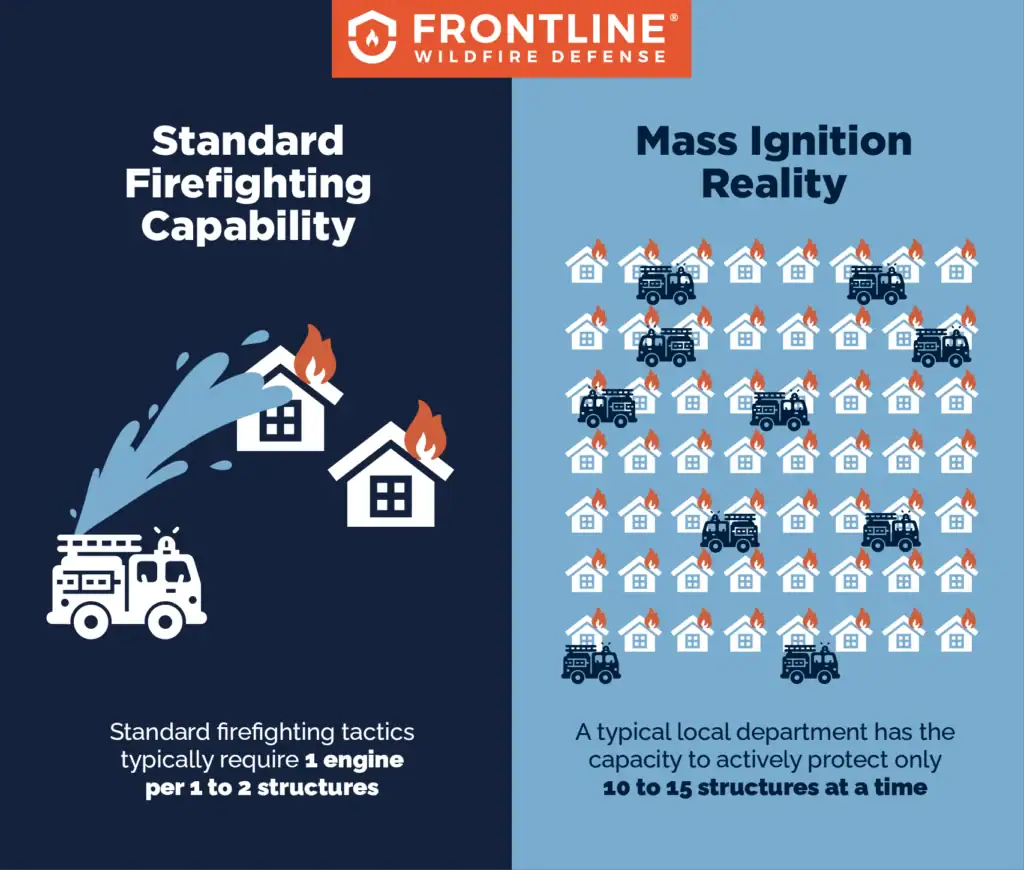
Fire departments typically assign one engine and crew to protect one or two houses. In many communities, the maximum number of structures a local fire department can defend at one time is 10 to 15. With mutual aid agreements, that number may increase to 50 to 100 homes. However, a fast-moving wildfire and the embers carried ahead of the main fire put whole neighborhoods and thousands of structures at risk, quickly overwhelming the fire departments’ capacity.
Consider a community such as Aspen, Colorado. Surrounded by dense forests and steep mountain terrain, homes and businesses extend from the city center into the Wildland-Urban Interface. Properties located high on the mountain slopes are often spread out and difficult to access.
Aspen has a well-equipped fire department and mutual aid agreements with departments throughout the valley. But with more than 6,000 housing units, commercial buildings, and homes throughout the surrounding mountains, the fire department wouldn’t be able to protect every structure. Even with mutual aid, firefighters would have to decide which properties to defend.
Maintaining fire protection when water pressure drops during a wildfire
When responding to a fire, firefighters typically connect hoses to hydrants and direct thousands of gallons of water at the flames. A wildfire can quickly push this approach beyond its limits when multiple structures catch fire at the same time. Homeowners need to take responsibility for protecting their own homes, especially when water availability is limited.
A wildfire defense system that detects changing conditions, activates automatically, and uses water strategically to reduce ember ignition can help alleviate the strain on the community water grid while providing proactive protection. Frontline Wildfire Defense’s water intelligence features increase wildfire resilience by maintaining fire protection when water pressure drops.
SHIFTING FROM HIGH-VOLUME SUPPRESSION TO PRECISION WILDFIRE PREVENTION
Preventing a fire requires far less water than putting one out. Prevention can happen by extinguishing embers that land on and around a property before they ignite, which is especially important when water supplies are low.
A municipal pumper truck flows up to 1,500 gallons per minute (GPM), or 90,000 gallons per hour (GPH), to extinguish a well-established fire. Given that level of demand, it’s easy to understand why water systems fail during wildfires.
An intelligent active defense system such as Frontline detects risks and responds automatically, soaking a structure with water and biodegradable, nontoxic firefighting foam. Instead of requiring 90,000 GPH to put out an established fire, the system can stop embers before they ignite and provide protection using just 400 to 500 GPH, or up to 180 times less water.
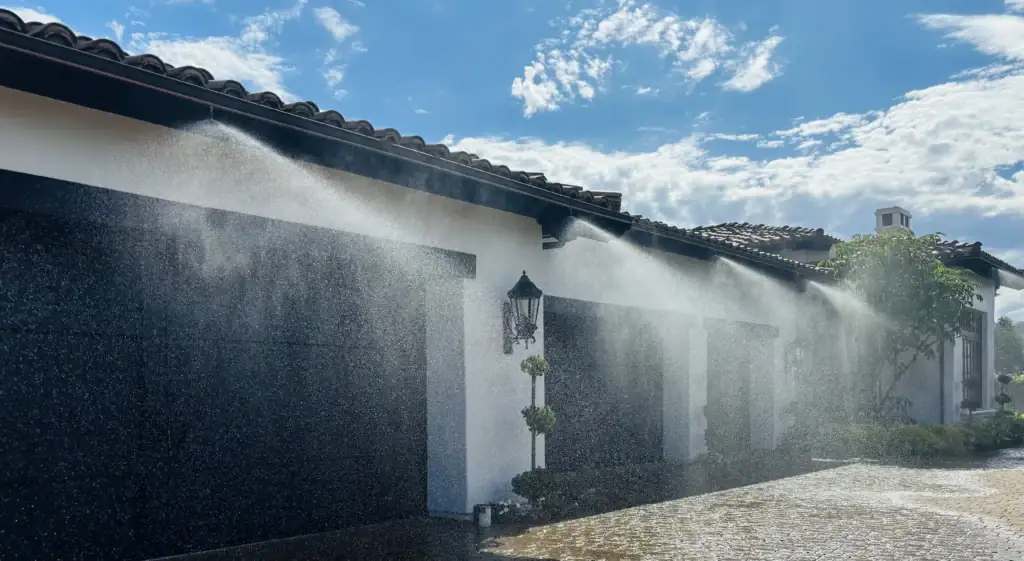
SMART SYSTEM CONTROLS: WATER-SAVING ZONE CYCLING AND LOW-VOLUME FOAM ADHESION
A smart wildfire defense system combines awareness, control, preparation, and strategic use of resources to protect a property and act before a fire arrives.
Frontline Wildfire Defense’s advanced software analyzes wildfire data, weather conditions, and property information to detect potential risks. It then responds automatically without requiring anyone to be on site.
The Frontline system is the only wildfire defense system that joins this software and hardware, strategically applying a mixture of water and biodegradable Class-A foam in high-risk areas. Instead of running continuously, the system cycles to maintain coverage while using water efficiently, keeping surfaces two to three times wetter without continuously draining the grid.
ACTIVATING A BACKUP WATER SUPPLY WHEN MUNICIPAL PRESSURE FAILS
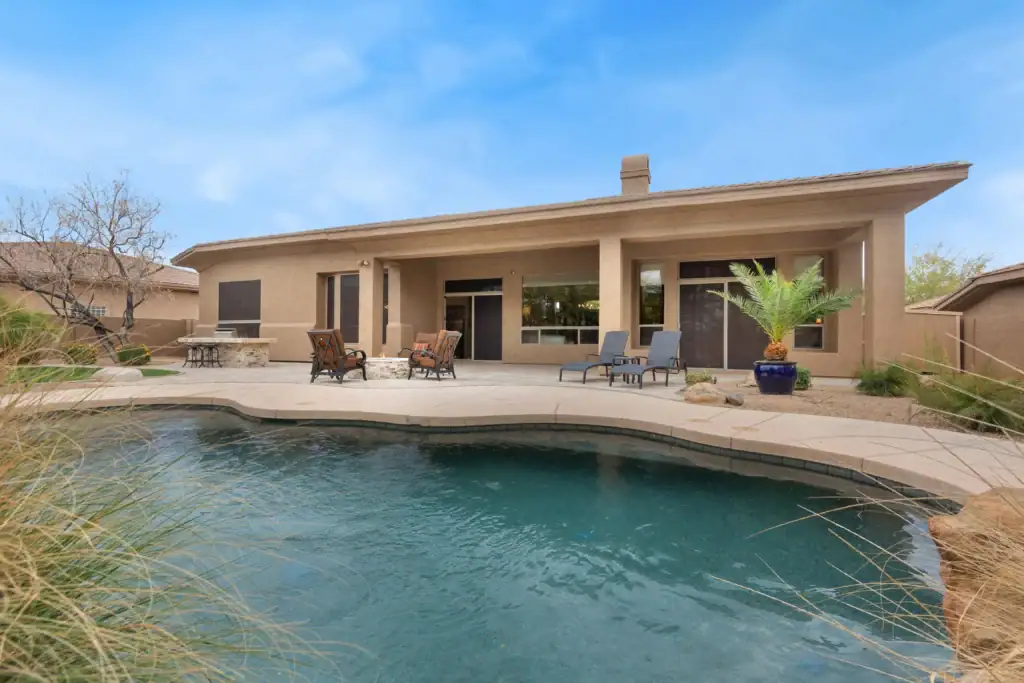
A water-efficient wildfire defense system continuously monitors conditions to ensure protection as circumstances change. If water pressure drops or the water grid fails during a wildfire, Frontline’s Smart Switch automatically begins drawing from an alternative on-site water source, such as a swimming pool, tank, well, or pond. The system continues providing active protection independent of the municipal water grid.
The Frontline system gives you visibility and control, no matter where you are. You can check the system’s status, manage manual activation, and stay connected without being on site. The Frontline Wildfire Defense command center also monitors your property and can remotely activate the system. With backup batteries and multiple ways to ensure communication, the system stays connected and active despite power outages or downed cell towers and phone lines.
Secure your property and support your community’s water supply
Wildfire protection depends on community fire resilience. When more homes have prewetting systems that rely less on the municipal water grid, firefighters have the resources they need to focus on other structures. Every home that’s proactively protected before embers can ignite reduces the burden on local firefighters, making it possible to redirect water and protect more areas of a neighborhood.
The Frontline Wildfire Defense system uses water intelligence to provide automated, proactive protection, a capability demonstrated during the 2025 Los Angeles wildfires. Of the 61 Frontline-protected homes, 59 withstood the flames while using an average of just 6.19 to 9.82 GPM, resulting in a 96% survival rate.
Protecting individual properties helps strengthen entire communities. If just 20% of homes in a neighborhood have Frontline systems installed, the local fire department’s capacity to protect surrounding homes effectively doubles. An investment in proactive wildfire defense is more than an investment in your property; it’s a contribution to the safety of your community.
See how Frontline Wildfire Defense can protect your home while strengthening your community’s wildfire resilience.