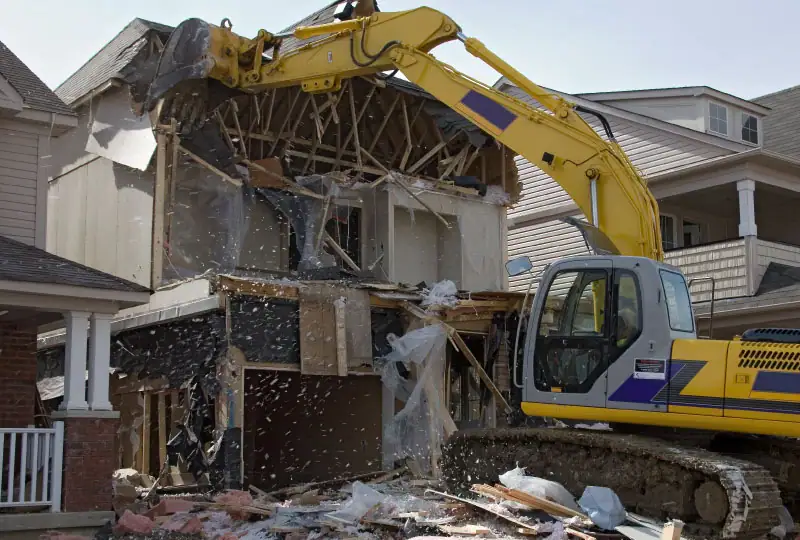
Rebuilding after a wildfire is the first step in restoring what you’ve lost. Done right, it gives you a safer and more resilient home.
We’ve put together this guide to help homeowners, architects, and contractors navigate the many considerations involved in fire reconstruction, in California or any fire-prone region.
Wondering what to do to rebuild after a fire? Reconstructing after a wildfire starts with understanding building codes and local restrictions, including new ones put in place after the fire.
You’ll need to decide if you want a like-for-like replacement that duplicates the house you had, or if you want to build something entirely new. Your choices will impact the structure’s safety, your costs, and your ability to get insurance.
Whichever you choose, thinking about fire prevention and resilience is an important part of rebuilding after a fire.
Jump to a section:
- Should you rebuild after a wildfire?
- Preparing for a post-wildfire rebuild
- Choosing the right architect and builder after a wildfire
- Code plus wildfire rebuild plan and design
- FAQs
Should you rebuild after a wildfire?
Deciding whether to rebuild is not simple. There’s a lot to do after a wildfire.
Aside from dealing with the emotions that come with loss, you have to think through practical considerations, such as:
Timeline
Knowing how long it takes to rebuild after a fire is one of the most important things. When a whole neighborhood or city is affected, everything from permitting to design, the build itself, and passing inspections takes longer.
You’ll need to coordinate contractors with local agencies to smooth the process.
Costs
The average cost to rebuild a house after a fire varies depending on your location, the extent of destruction in your community, and the kind of home you’re rebuilding.
Insurance may cover a portion of the costs. You may also be able to access financial assistance programs and grants. However, you’ll likely have to pay out of pocket to fill the gaps.
Community aspects
In many cases, wildfires damage utilities, roads, and water systems as they roar through neighborhoods. Communities may adopt stricter regulations and new codes to rebuild in more fire-resilient ways.
It makes sense to research community resources and tools to understand support systems and programs for rebuilding in your area.
Site-specific risks
Have a professional make a thorough assessment of your property, checking slopes, vegetation, and effects from any flashover.
The extreme heat of a flashover can change soil composition, topography and drainage, affecting your ability to build a stable foundation that’s safe during future fires.
Preparing for a post-wildfire rebuild
Rebuilding after a wildfire is a time-consuming process of planning and coordination.
It begins with assessing the damage, getting the necessary permits, and understanding changes to building codes and fire safety standards.
The following steps will help you navigate through recovery and build a resilient home after a fire in Los Angeles, Maui, or any other location.
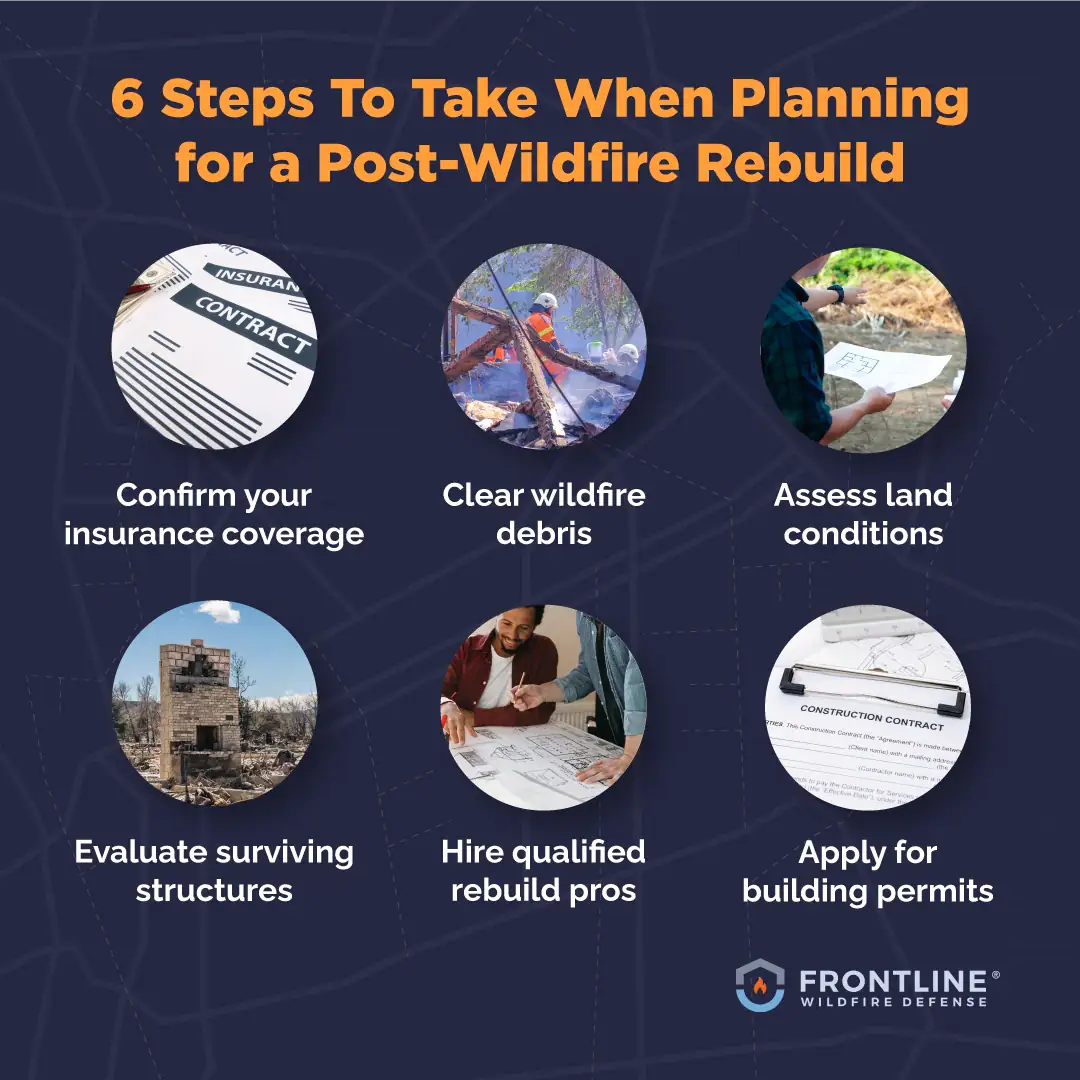
1. Find out what your insurance will cover
The first step is to confirm your insurance payout. Your policy may pay the replacement cost to rebuild to current standards. Or, it may pay the actual cash value of the house you lost, minus depreciation.
Your coverage may have limits and other carveouts, leaving gaps you need to fill. Your insurer or agent can help you understand your coverage.
2. Remove debris after a wildfire
Clearing your property of wildfire debris must be done before anything else. Materials can be toxic, containing asbestos, heavy metals, and ash. They require professional removal and disposal by certified contractors.
Local agencies can help you find the expertise to safely remove debris in preparation for rebuilding.
3. Assess land safety
You’ll need a professional assessment of the stability of your land. Wildfires can weaken soil and kill roots. These unseen changes to the ground can make it more susceptible to flooding, erosion, mudslides, and other drainage issues. After a fire, the soil may also retain contaminants and chemicals.
People looking to rebuild after a fire in Maui or Los Angeles may need to have their land recontoured, soil recompacted, or have retaining walls built.
4. Inspect the remaining structures
If any part of your home survived a fire, you’ll need a structural engineer to evaluate it and make sure it’s structurally sound.
Can you rebuild on a foundation after a fire? Walls or foundations may appear to be intact, but framing materials, steel reinforcement, and materials in the concrete may have been weakened in the extreme heat.
5. Hire an architect and a contractor
Work with an architect who has experience in post-wildfire construction and specialized expertise in designing for fire resilience. They’ll reduce ember collection points, select fire-resistant materials, design defensible spaces, and recommend active defense solutions.
It also helps to have contractors with local expertise. To rebuild after a fire in Los Angeles, you want to work with a licensed contractor who is familiar with current building codes, permitting and inspections protocols.
Be wary, as unlicensed contractors flock to areas after a disaster to take advantage of people who are tight on cash and desperate to move forward quickly.
6. Apply for a building permit
When your planning is done, your architect or contractor will usually submit the building permit on your behalf. For a Maui or Los Angeles rebuild, expedited permitting, especially for like-for-like replacement homes, can help you speed through this process.
If you have a good architect and contractor, your plans will meet or exceed wildfire safety standards and changing codes, so you can get permits quickly.

Choosing the right architect and builder after a wildfire
Everything about rebuilding a house after a fire will be easier, faster, and most likely more cost-effective if you work with a qualified architect and contractor.
It’s vital to choose professionals with experience in fire-safe design.
If you’re investing in a layered wildfire defense system for new construction, select professionals with experience working with Frontline technology or similar systems. Look for companies like TJH , Burdge, and Setsuki House who take a tech-savvy, “code plus” approach to design, material selection, and integrated fire-suppression systems.
Interview architects and builders to assess their experience with fire safety, by asking questions such as:
- How do you approach designing for wildfire safety codes?
- What fire-resistant materials and technologies have you worked with successfully?
- What projects have you completed in designated wildfire hazard zones? Can you provide examples?
- How do you coordinate with local fire officials, regulators, permitting, and insurance providers during design and construction?
Designing for a “code plus” wildfire rebuild
Going beyond the minimum safety requirements of building codes is the heart of “code plus” rebuilding. Building codes are designed to establish baseline safety standards that apply to a wide range of conditions. Yet, they’re often slow to change or be updated, meaning they don’t always reflect the latest wildfire science, testing, or real-world fire behavior.
Adding extra layers of protection is a key step in rebuilding after a wildfire. It provides greater peace of mind and a building with a stronger defense in future fire events. Insurance companies often require, or at least incentivize, “code plus” rebuilds.
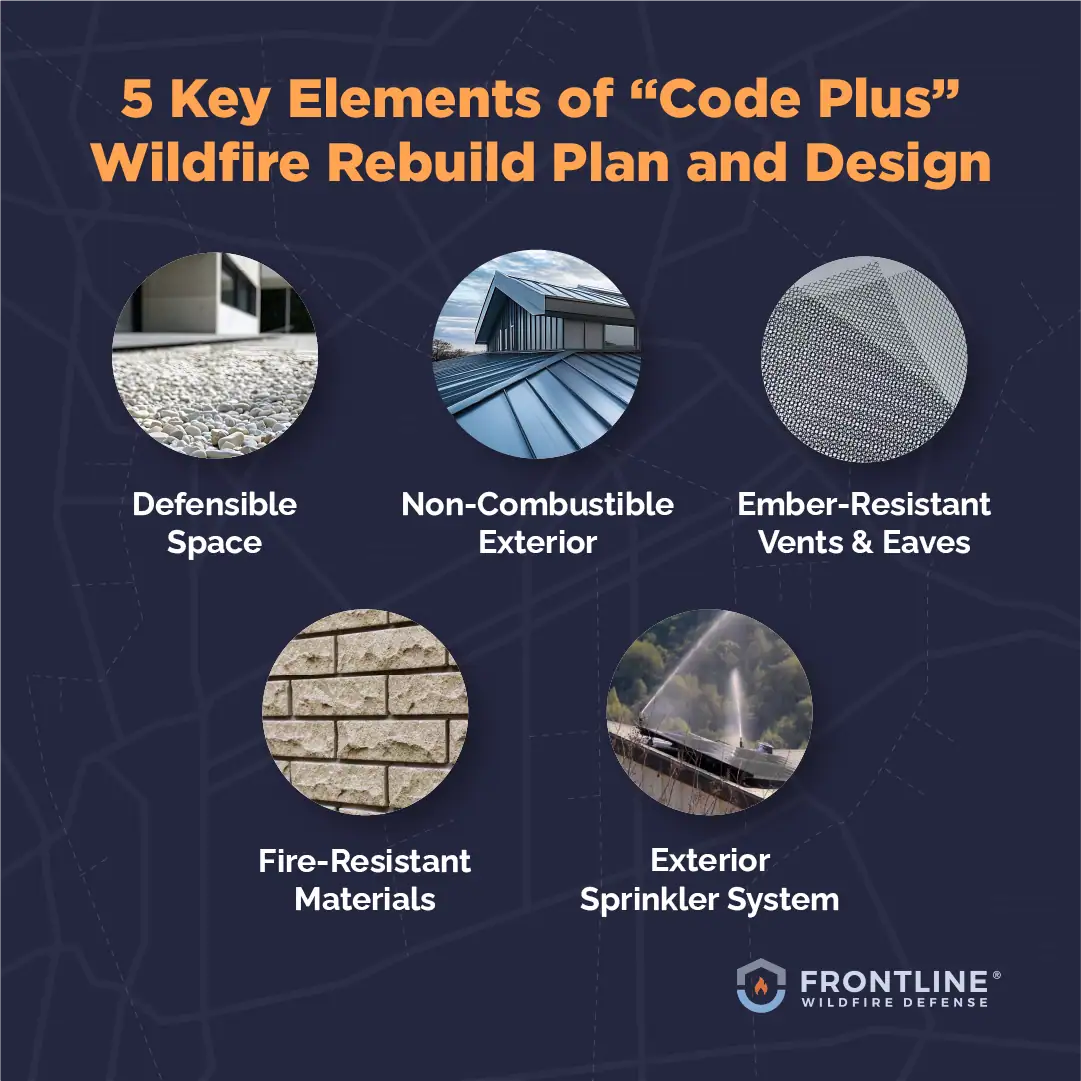
“Code plus” construction reduces the likelihood of ignition. It uses fire-resistant materials, ember-resistant vents and eave designs, non-combustible siding and roofing, active fire suppression systems, and defensible space landscaping to lower the risk of your house catching fire.
Investing in long-term durability and layering in fire resilience will reduce the risk of costly repairs and rebuilds — and the emotional toll of another loss.
Planning your site and landscape
Put thought into planning and creating defensible space when rebuilding after a wildfire.
Choosing the right plants, keeping them away from structures, and spacing them to prevent a dense fuel supply will help protect your home. Keep in mind that even firewise plants can burn if not properly maintained, so choose species you are willing and able to care for. Also, minimize the use of wood mulch, flammable fencing, and other combustible garden structures.
Xeriscaping can play a role in Zone 0, but the goal isn’t to strip the area bare. Rather, it’s to limit combustible materials within the first five feet of the home. Everyday items like doormats, patio cushions, toys, and parked vehicles can act as ignition sources and should be kept well away from exterior walls as part of a well-designed, low-risk Zone 0 space.
Adding an integrated active system, like exterior sprinklers and automated suppression, adds another layer of protection against embers.
Hardening your home during a rebuild
You can design fire resistance into your home. When rebuilding a house after a fire, choose designs and materials that reduce the structure’s vulnerability to wildfires.
Because embers are one of the most common ways homes ignite during wildfires, features like sealed eaves and non-combustible building materials are proven, passive ways to harden your home and lower the risk of ignition.
Concrete walls, metal roofs, and tempered glass windows resist heat and ignition.
When it comes to rebuilding after a wildfire, these approaches will provide long-term fire protection that pays off for years to come.
Building with active fire defense technology
Active fire defense systems add a critical layer of protection to your home by responding to wildfire threats in real time, even when you aren’t home. Unlike passive measures alone, these systems are designed to actively reduce ignition from embers and radiant heat during a fire event.
The best active defense technologies use live monitoring to detect approaching wildfires and automated sprinklers to suppress embers around the home, especially in Zone 0, where embers are most likely to ignite vulnerable materials. These systems can activate automatically and be controlled remotely before, during, and after a wildfire, helping protect your property even when evacuation is required.
The Frontline Wildfire Defense sprinkler system represents the most advanced version of this approach. Beyond automated detection and ember suppression, Frontline systems are designed with additional safeguards, including backup power, dedicated water sources, and remote activation. These added layers ensure the system continues operating even when infrastructure and utilities fail, providing a higher level of resilience when it matters most.
Rebuilding communities after a wildfire
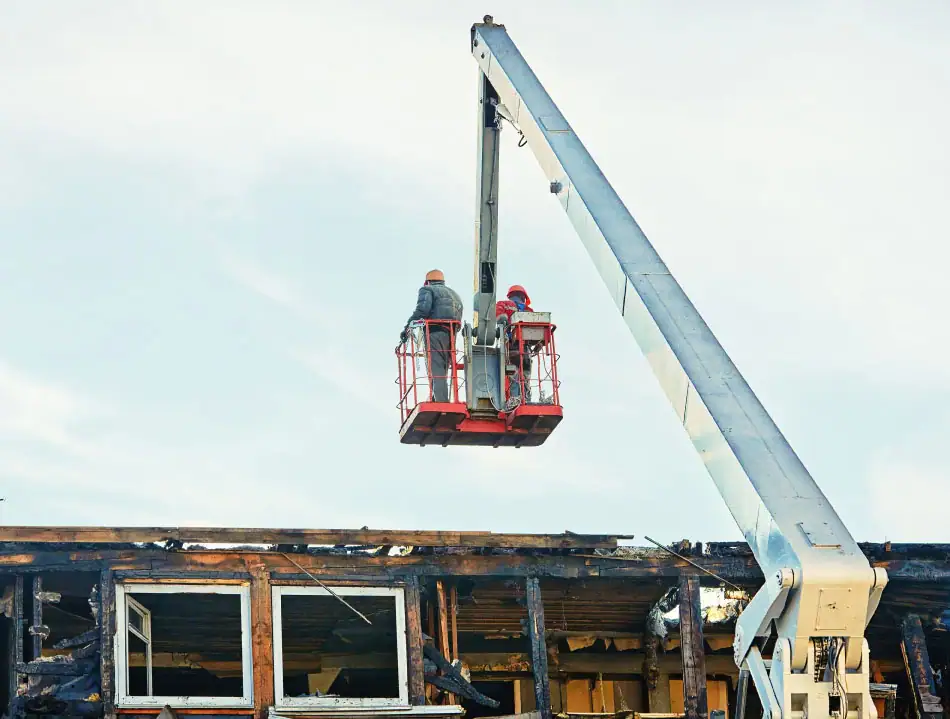
Wildfires can devastate entire neighborhoods, not just individual homes. Rebuilding after wildfires is a community effort that requires restoring water, power, drainage, and landscapes while improving neighborhood resilience against future fires.
Architects and builders must consider updated building codes and zoning regulations while collaborating with communities to strengthen area-wide wildfire protection.
FAQs
Is Los Angeles being rebuilt after the fires?
The effort to rebuild after the fires in Los Angeles is slowly proceeding, with the first rebuild in Pacific Palisades scheduled to begin in 2026. Led by Thomas James Homes, the effort will involve breaking ground on 100 Palisades homes in the new year.
The homes will feature several fire-resistant building measures, such as ember-resistant ventilation, noncombustible materials, and boxed eaves for the roofs. The plumbing for all homes will also be designed to allow for easy installation of the Frontline Wildfire Defense System.
To help coordinate these and other efforts, programs have been put in place to expedite permits, track progress, and improve access to local specialists for debris removal. County programs, like the one-stop permit centers and expedited like-for-like replacement reviews, are meant to streamline community and individual recovery and after-fire reconstruction. While speeding up the rebuild after a fire is important, the efforts are balanced with updating safety and fire-resilient building standards.
What is Chapter 7A of the California Building Code?
California Building Code’s Chapter 7A specifies the construction choices and materials that must be used on buildings exposed to wildfire. The goal is to reduce the risk of exterior ignition by using fire-resistant materials and building methods.
Codes for new construction in wildland-urban interface areas aim to create communities that are much more fire resilient.
What can you do to rebuild faster after a wildfire?
How long does it take to rebuild after a fire? It depends on what you’re rebuilding, how much of the community infrastructure has been affected, and the architect and builder you choose. The steps to rebuild after a fire, whether in Los Angeles or another area, begin with removing debris, getting a site assessment, and submitting plans for approval and permits.
L.A. County provides one-stop permit centers and pre-approved planning options to help guide homeowners through the rebuilding process. For like-for-like rebuilds, the county’s online tools and resources can help applicants navigate requirements more efficiently.

Build a safer, smarter, fire-resilient home
If you’ve lost your home to a wildfire, you’re likely facing many challenges from processing the emotional impacts to navigating the steps, timing and cost required to move home.
Rebuilding is also an opportunity to take control. Partnering with experts who focus on long-term safety can help create a home that’s built to be more resilient against future wildfires. From choosing fire-resistant materials to installing defense systems, every choice can help reduce risk for your family and community.
If you’re ready to rebuild stronger and want to protect your home with wildfire defense technology, contact us today.
More from the Frontline Blog
All Posts
Although the goal of many homeowners is to have a fireproof home, this isn’t actually possible. Anything will burn...
Dear Friends and Neighbors, As we mark the one-year anniversary of the January 7th fires, I want to take...
Zone 0 wildfire prevention has been getting attention across the state of California in recent years. Though it was...