How Homes Catch on Fire During a Wildfire
Embers are the #1 threat
Video courtesy of the Insurance Institute for Business & Home Safety
Wildfire embers are far more likely to start a house fire than flames. Most homes affected by wildfires are set ablaze due to wind-driven burning embers that land on or near the structure. These embers can start small fires in Zone 0, the immediate area around the house, which can spread upward and inward until the house ignites.
In this guide, we’ll explain what embers are, how an ember fire can quickly escalate, and what you can do to prevent the embers of a fire from igniting your home.
What are fire embers?
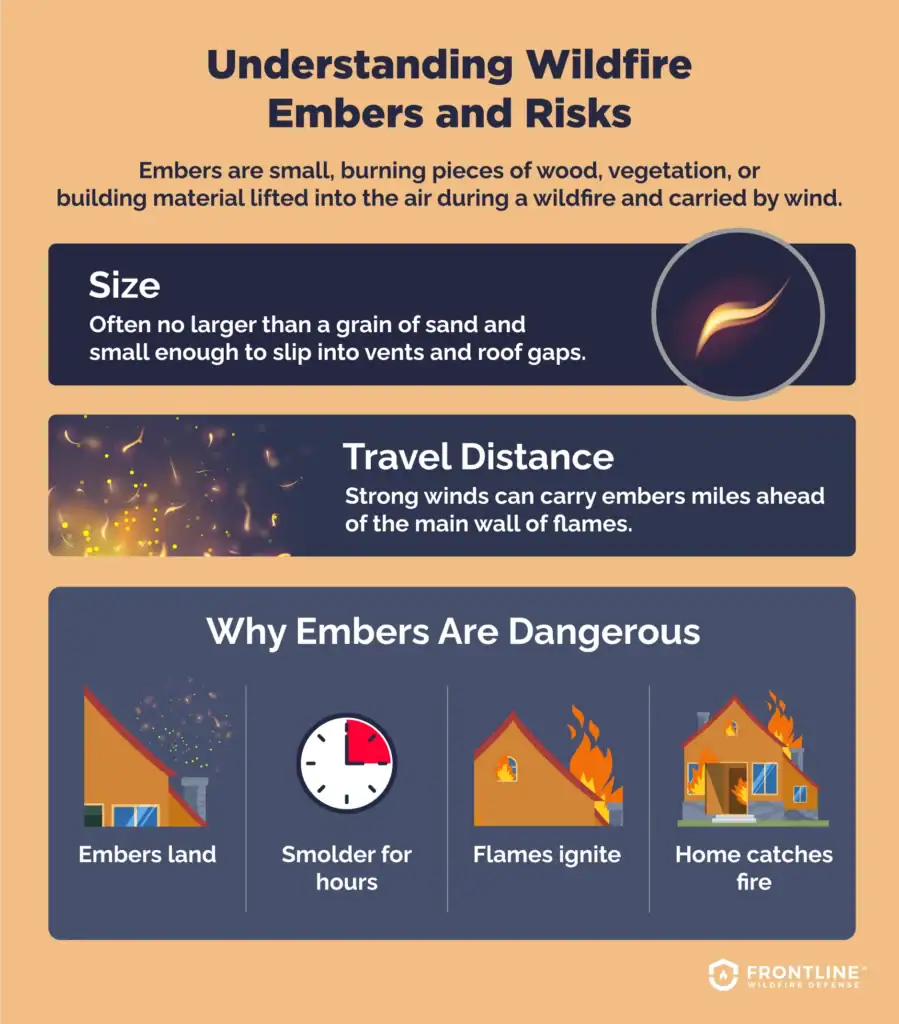
The embers of a fire are small burning pieces of wood, vegetation, or building material that are lifted into the air during a wildfire. Once airborne, wildfire embers can be carried by the wind for miles, traveling far ahead of the main wall of flames.
Embers are often small and lightweight, making them capable of slipping into vents, accumulating in gutters, or settling on debris near your house. There, they can smolder for hours until they gain enough heat to ignite the surrounding material. Smaller embers can spark multiple small fires that quickly combine into a larger blaze capable of destroying your home.
How do houses catch on fire during wildfires?
There are several ways houses can catch fire in the path of a wildfire:
1. FLYING EMBERS (PRIMARY CAUSE)
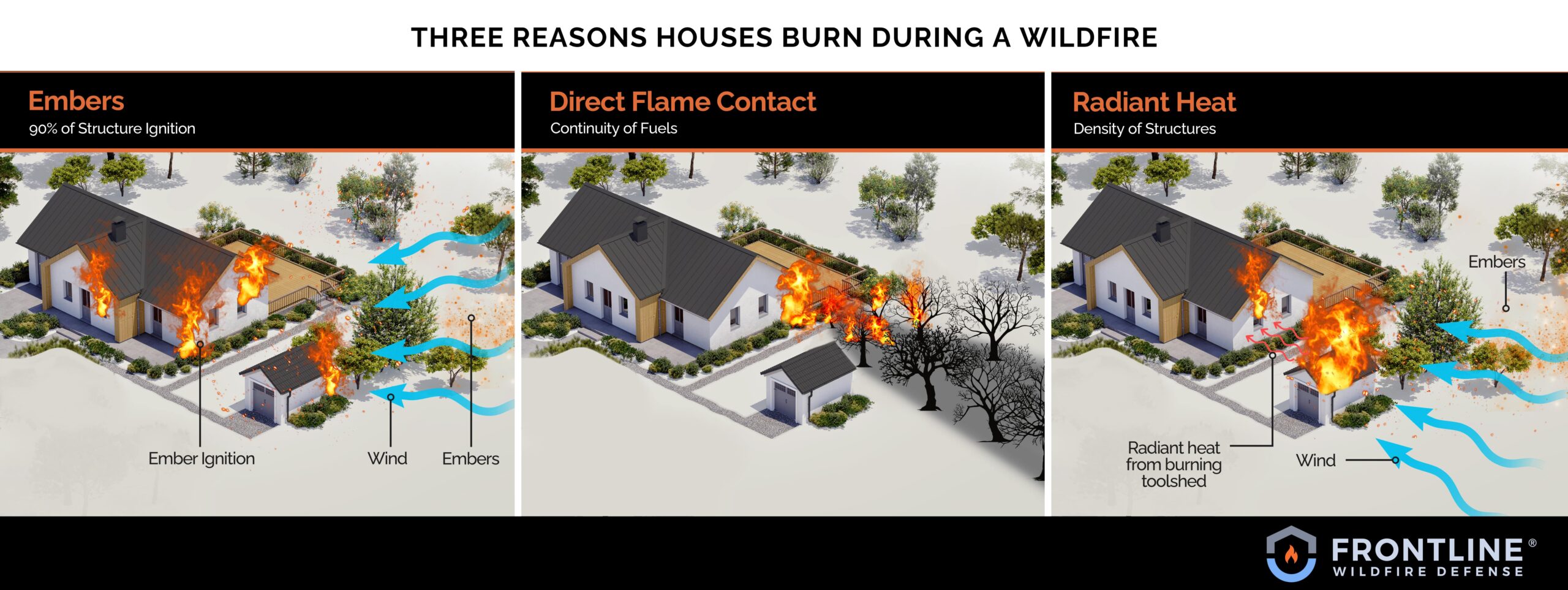
When we think of wildfires, we often envision large walls of flames engulfing homes. However, most homes don’t ignite from direct contact with a flame front. Ember ignition is the leading cause of home loss, with an estimated 90% of homes destroyed indirectly by wind-borne embers.
These embers can travel miles ahead of the main fire and land on a home’s patio furniture, doormat, deck, landscaping, or roof. Once these items ignite, fire can quickly spread to the rest of the home, making embers one of the greatest threats to structures during a wildfire.
2. RADIANT HEAT (SECONDARY CAUSE)
Radiant heat is the indirect heat emitted by flames and burning materials that can cause nearby objects, including homes, to ignite. Even if embers themselves don’t directly start a fire, the heat from burning siding, decks, or other materials can be intense enough to ignite windows, exterior walls, or other vulnerable parts in the immediate perimeter of your home, known as Zone 0. Once a structure begins to burn, the radiant heat it produces can then ignite nearby materials or neighboring buildings, creating a chain reaction that spreads fire rapidly.
3. DIRECT FLAME CONTACT (LEAST COMMON CAUSE)
While flames can ignite a home, direct flame exposure is the least common cause of wildfire home loss. It occurs when flames physically touch a house or nearby materials, often during a fast-moving wildfire with continuous fuel between the fire and the home.
Flames become dangerous primarily when embers first ignite combustible materials near the home, such as patio furniture, decks, or dense vegetation, which then allow fire to reach the main structure. If homes are close together, flames from one burning house can also spread directly to neighboring residences.
Post-fire findings show that homes are largely lost due to ember ignition
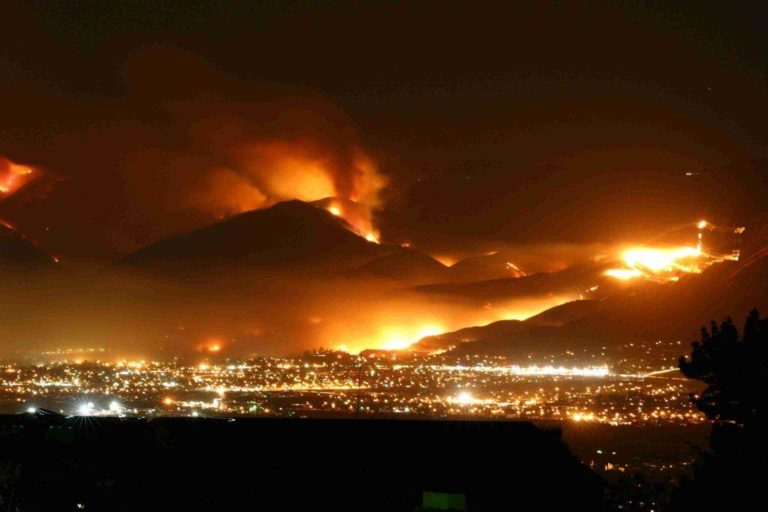
Investigations into recent wildfires have confirmed that wildfire embers are the primary cause of house ignition. Floating fire embers played a major role in driving wildfires into built-up areas during the 2025 Palisades and Eaton fires in Los Angeles County.
Controlled experiments by the Insurance Institute for Business & Home Safety (IBHS) show that embers can easily ignite an entire building when they enter vents or lodge in gutters.
A 2007 study of the Witch and Guejito fires in San Diego found that embers burning ahead of the main fire were involved in nearly every home lost.
Is it possible to prevent ember ignition?
IBHS studies illustrate not only how the embers of a fire can ignite a home but also what steps homeowners can take to lower the risk from these floating fire embers.
One study simulated an active wildfire by showering embers on a duplex house structure in a test chamber in South Carolina. The house was designed and landscaped on one side as a wildfire-resistant structure, while on the other side, common materials were used without consideration for wildfire resistance. The wildfire-resistant side didn’t burn, proving that if embers lack the fuel to ignite, the chance of a home being destroyed by wildfire is significantly reduced.
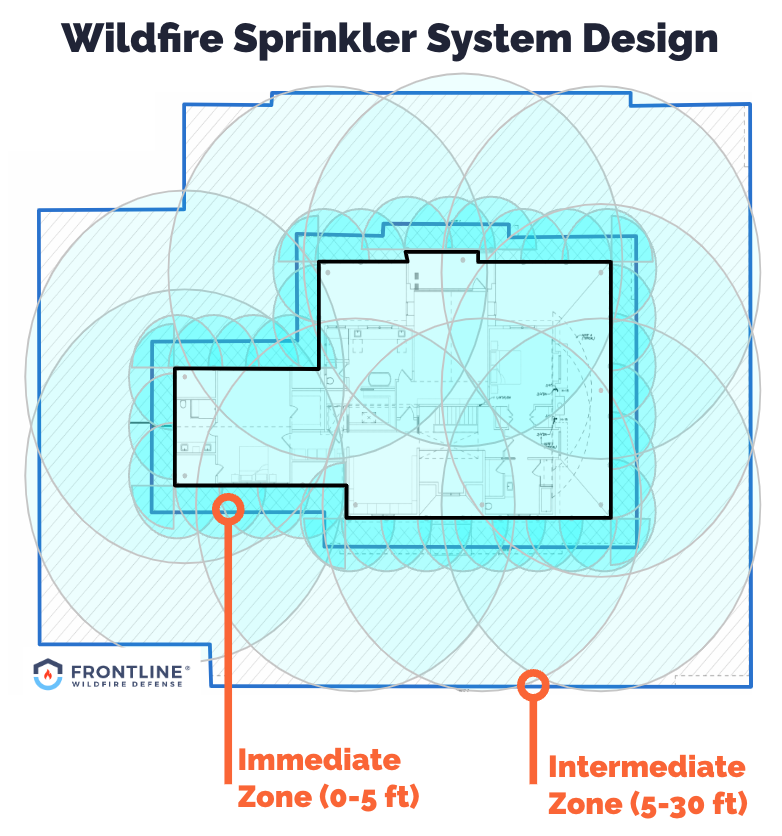
These tests demonstrate the importance of active defense. A relatively small amount of water can extinguish an ember, which is why exterior sprinkler systems, such as the Frontline Wildfire Defense System, are designed to proactively saturate Zone 0. By wetting vulnerable areas before embers arrive, these systems help ensure the space is too damp to ignite, adding a critical layer of protection where it matters most.
CREATING AN EMBER-RESISTANT ZONE
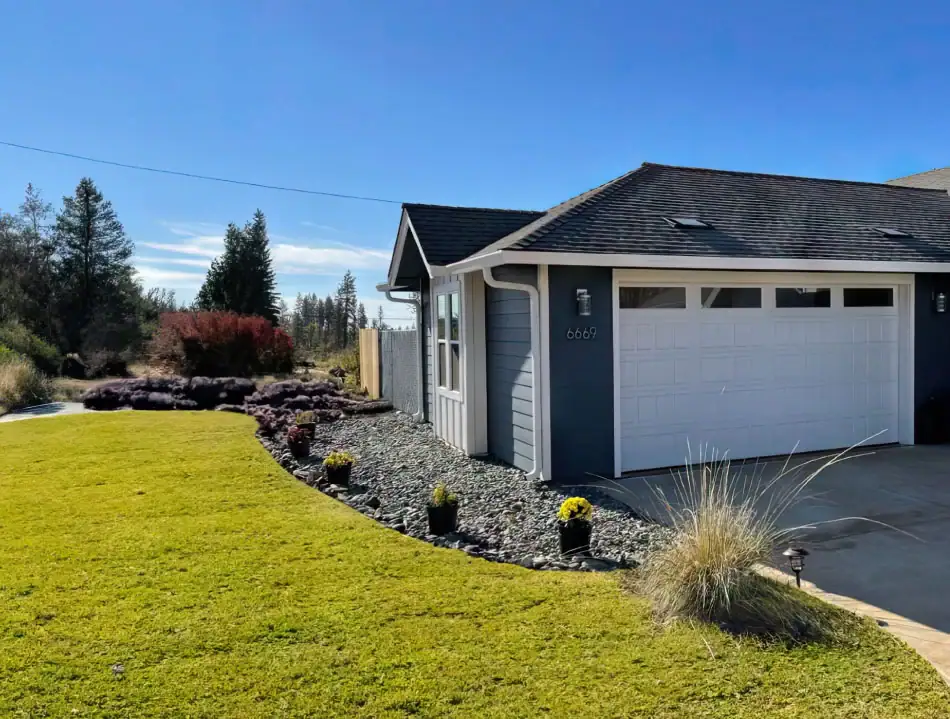
Reducing the risks in the immediate area around your home can greatly reduce the chance your house will be destroyed by an ember fire.
IBHS research shows that establishing a buffer zone of noncombustible materials and plants around your house can be highly effective. With the right planning and maintenance, you can reduce the risks to your home by as much as 50%. The following links provide information on some practical steps you can take to get started:
CREATING CONDITIONS TOO WET FOR EMBERS TO IGNITE
Wildfire ember risk can be further reduced with a defense system that creates an environment that’s too wet to permit embers to ignite a fire. Sprinklers or automated hydration systems placed directly on your home and in Zones 0 and 1 closest to the main structure can help saturate the area prior to exposure to embers.
A University of Minnesota study on the Ham Lake Fire found that applying water intermittently over a 24-hour period was effective at preventing embers from igniting. Of the 104 structures studied, 46 homes equipped with a working external wildfire sprinkler system survived, while 38 without sprinklers were lost.
Fire ember FAQs
WHERE DO EMBERS IGNITE HOMES FIRST?
Embers typically accumulate in gutters, vents, and eaves, where they can reach temperatures high enough to cause ignition. Decks, patio furniture, and dry leaves or mulch that’s close to your house are also easy places for embers to start a fire.
HOW FAR CAN AN EMBER TRAVEL?
Embers can travel up to five miles ahead of wildfire flames, depending on factors such as wind speed, topography, and ember size. Stronger, faster winds keep embers aloft longer and push them further ahead of the main fire. Features like hills and canyons can cause updrafts that lift embers higher and help them travel farther. Smaller, lighter embers stay airborne longer, but larger embers are more likely to ignite new fires when they land.
HOW LONG DO EMBERS BURN?
There isn’t a fixed burn time for embers. How long they remain hot enough to start fires depends on their size, composition, and environmental factors. For example, dense, oil-rich materials create embers that can retain heat much longer than lighter, drier materials, and larger embers tend to burn for longer than smaller ones. Temperature, humidity, and wind also affect burn time, with hot, dry, calm conditions helping embers stay hot for longer.
WHAT CAUSES WILDFIRE EMBERS TO SPREAD?
Embers are spread through two main types of wind. First, natural winds from the weather can carry burning embers ahead of the fire. Second, winds can be created by the wildfire itself through rising hot air and turbulent updrafts from flames consuming trees, brush, and buildings. These winds can then lift embers into the air and push them outward. Both mechanisms allow embers to travel distances far ahead of the main fire, igniting new spot fires along the way.

The Frontline Wildfire Defense System
Our exterior wildfire sprinkler system is designed specifically to protect homes from embers, the leading cause of wildfire damage. Using intelligent water management and Class A firefighting foam, it pre‑hydrates your roof, eaves, and surrounding perimeter when fire is detected. This ensures surfaces stay too wet to ignite when embers land and allows you to prepare well before flames arrive.
By focusing on the specific threat posed by embers, not just nearby flames, the Frontline Wildfire Defense System significantly increases the chances that your home will survive a wildfire.
Contact us today to learn more and see if our system is right for you.