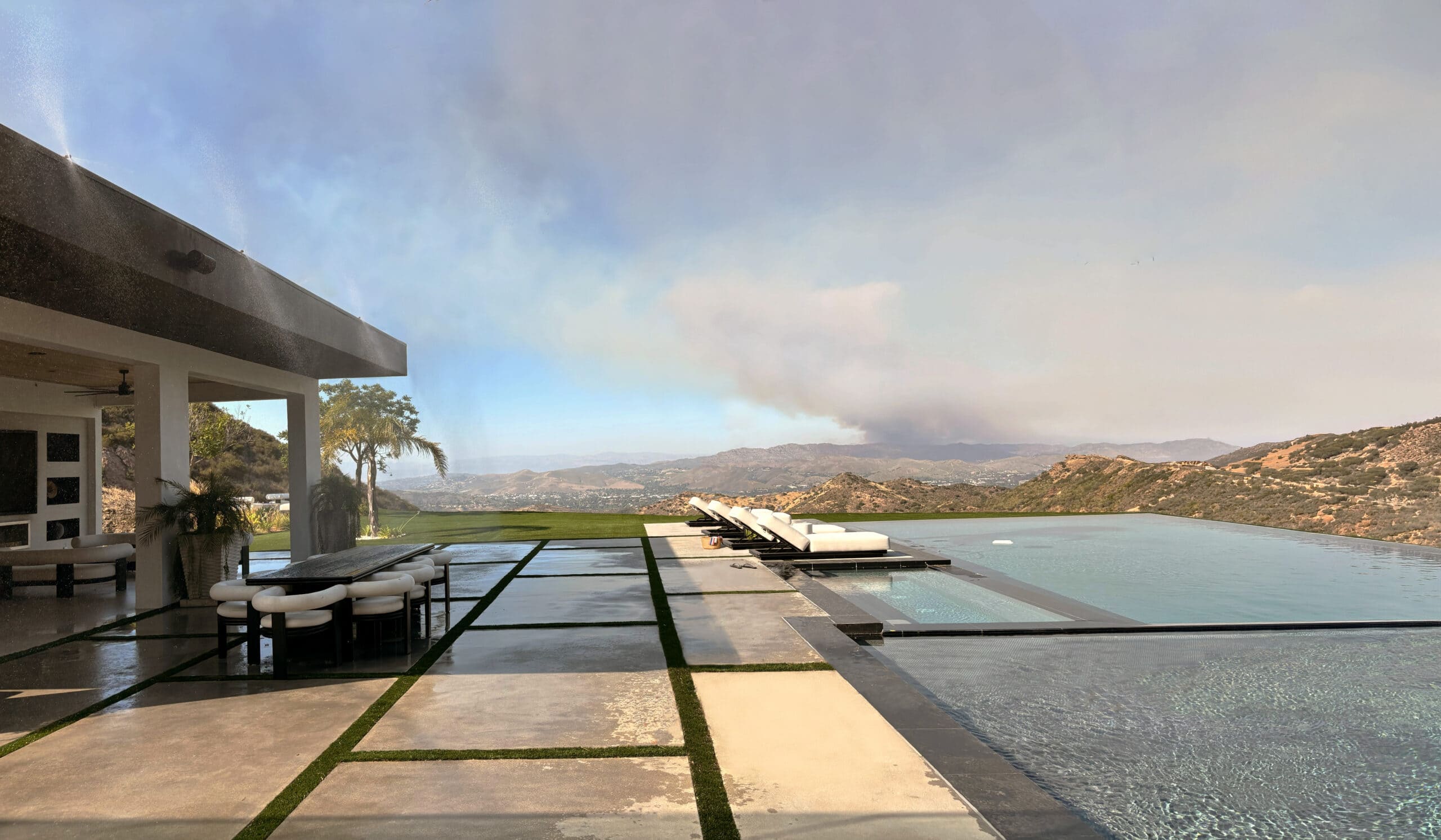
In the recent Sandy Fire in the Simi Valley–Westlake corridor, we are seeing something that is becoming increasingly common in California: fire returning to places that have already burned in recent years.
Wildfire used to feel like a single event in a place. A fire would move through an area and, for a time, it felt like the risk had reset. Like lightning striking twice, it seemed unlikely to happen again anytime soon.
The recent Sandy Fire challenges that assumption.
Burning more than 2,000 acres above Simi Valley and Westlake Village, the fire prompted evacuation orders for tens of thousands of residents as winds pushed flames through steep terrain and dry vegetation. What made this fire particularly notable wasn’t just its size or speed, it was where it burned.
Much of the Sandy Fire occurred within the same broader landscape impacted by the Woolsey Fire in 2018, one of Southern California’s most destructive wildfires. Woolsey burned nearly 97,000 acres, destroyed 1,643 structures, damaged hundreds more, and dramatically altered the vegetation across the region.
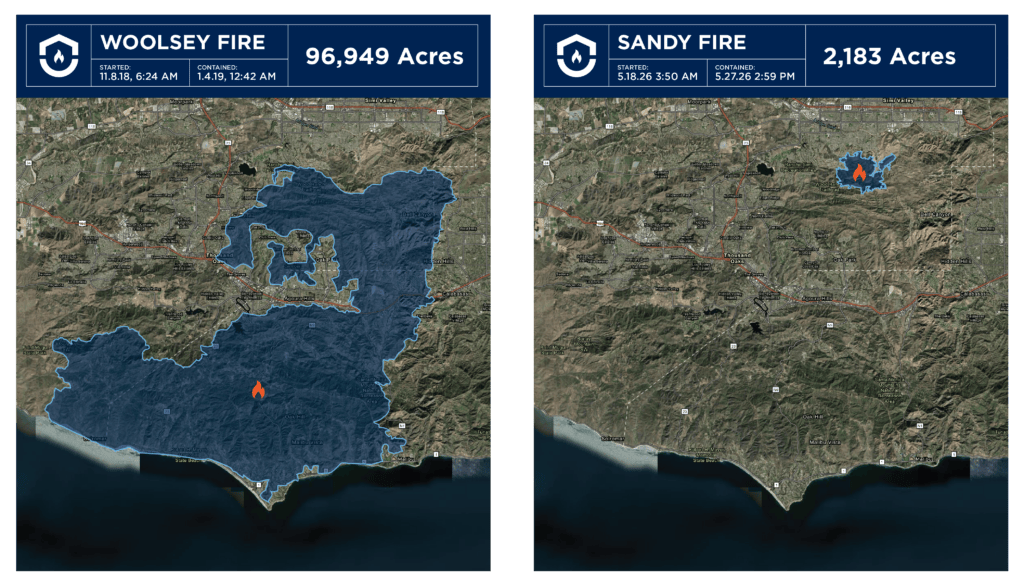
One of the most common misconceptions about wildfire is that a burned area is a safer area. For a short time, that may be true. But in Southern California, vegetation returns quickly, and with it, wildfire risk.
Within a few growing seasons, burn scars are no longer “cleared” landscapes. They are fuel beds again. The Woolsey Fire removed large areas of mature chaparral and brush, but over the past eight years those burn scars have filled in with new growth. Particularly grasses and lighter fuels that dry quickly and respond rapidly to wind. As Ventura County fire officials noted, “The Woolsey fire eliminated heavy brush that had built up over years, while the Sandy fire is fueled by new growth, particularly dry grasses.” And under wind-driven conditions, that fuel can support rapid fire spread back into the same neighborhoods that were previously impacted.
That change in vegetation is visible on the ground in places like Simi Valley and the surrounding hills. The same canyons and ridgelines can carry fast-moving grass fire particularly under similar wind conditions.
At the structure level, the mechanics of ignition remain largely the same too. Embers continue to be the primary cause of home loss in wind-driven fires, traveling ahead of the main fire front and finding fuels vulnerable to ignition. That pattern returns with the landscape.
We’ve seen that reality play out in recent events across Southern California, where wind-driven fires have threatened homes that had already lived through earlier fire seasons. The context changes, but the exposure mechanism does not. Consequently, preparedness is shifting from a reactive response to Frontline’s systems-based solution focused on active, automated structure protection before ignition conditions align.
During the Adams Fire in Santa Paula, about 25 miles northwest and within days of the Sandy Fire, flames crested the ridge across from a homeowner with a Frontline system. As her Frontline Wildfire Defense system activated, she watched live fire conditions unfold and said, “I’m glad I put the wildfire suppression system on my house.”
This reflects what many homeowners in these regions are now confronting: wildfire risk is a recurring condition that interacts with the home each time wind and fuel align. However, Frontline changes the experience from helpless vulnerability to proactive defense, providing peace of mind when conditions are calm and confidence when fire is active.
Fire is a natural part of these landscapes that will inevitably return to the same canyons and ridgelines. While we cannot eliminate the forces of nature, we can recognize the pattern and Frontline offers the practical solution to protect homes and communities when it returns.
More from the Frontline Blog
All Posts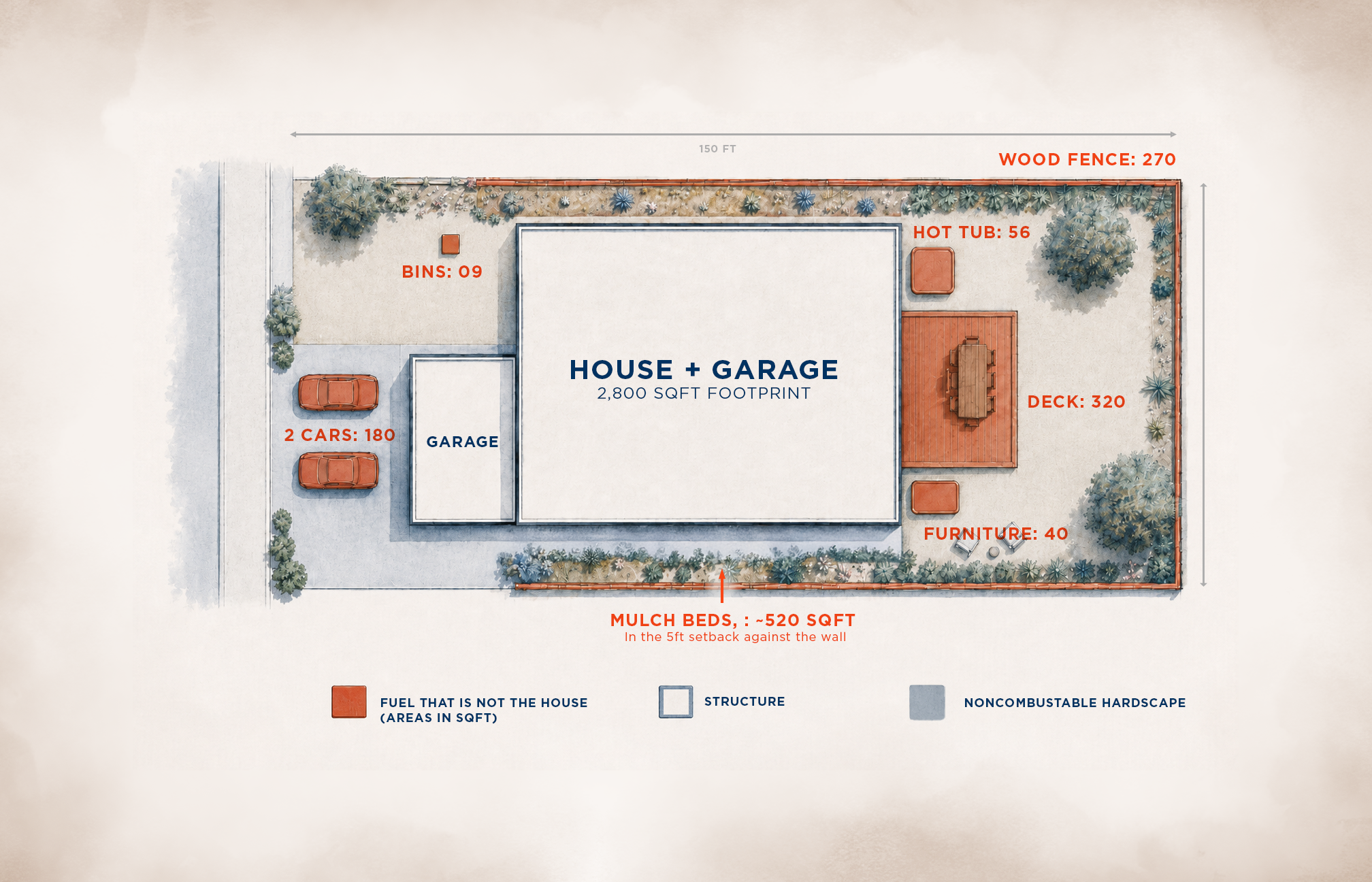
A Massive Gap in Passive Structure Hardening Virtually every wildfire expert agrees that wind-driven embers are the primary threat...
Every homeowner’s journey with Frontline begins with a conversation. For many, that conversation comes after experiencing a wildfire firsthand,...
Technology is changing what’s possible in wildfire protection. Now the challenge is helping people reimagine what’s possible and that’s...