Understanding California’s 100-Foot Defensible Space Rule
The California 100-foot defensible space rule requires a buffer zone around your home that reduces its vulnerability during a wildfire. Below, we explore the details of the California 100-foot rule, Public Resources Code (PRC) 4291 compliance, and actionable steps you can take to better protect your home, pets, and family.

Jump to a section:
- What is the California 100-foot defensible space rule (PRC 4291)?
- Breaking down the 3 defensible space zones
- Home hardening: Pairing passive space with active defenses
- How defensible space impacts your homeowners insurance
- Preparing for a CAL FIRE defensible space inspection
- Frequently asked questions
- Go beyond defensible space with Frontline’s active wildfire defense system
What is the California 100-foot defensible space rule (PRC 4291)?
California Public Resources Code § 4291 (PRC 4291) (LegInfo), is commonly known as the California 100-foot defensible space rule. What is the new rule for California? It requires homeowners in high-risk areas to remove or reduce combustible materials within a 100-foot zone around their homes and maintain that space over time.
Local fire departments enforce the rule through inspections in designated Local Responsibility Areas, and the California Department of Forestry and Fire Protection, or CAL FIRE, enforces it in State Responsibility Areas. For example, CAL FIRE reported performing more than 326,000 defensible space inspections in 2024/2025. Some communities, particularly in vulnerable Wildland Urban Interface areas (WUIs), have adopted additional defensible space rules to further protect their neighborhoods.
What happens if you violate the 100-foot defensible space rule in California?
If an inspection finds violations, property owners typically receive notice of what to correct and a timeframe to do so, followed by a reinspection. If the problems aren’t fixed, enforcement can escalate to citations and fines. Depending on the jurisdiction, authorities may also have the fire hazards corrected and charge the property owner for the work.
Breaking down the 3 defensible space zones
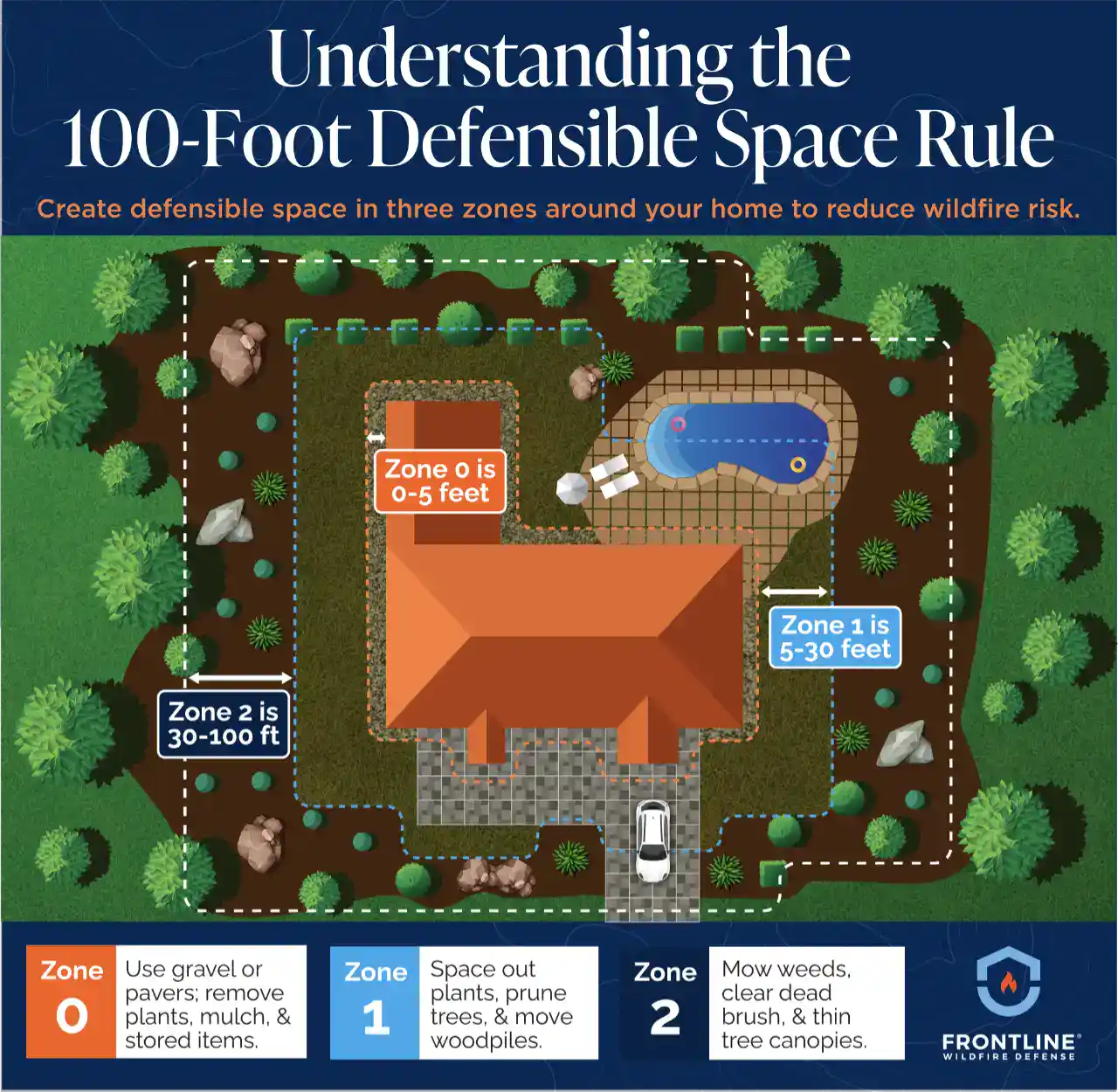
Rules for defensible space in California divide the 100-foot area around your structure, known as the Home Ignition Zone (HIZ), into three distinct zones. Managing these areas reduces the chance that wind-driven embers will ignite vegetation, outdoor structures, or non-attached combustibles, helping prevent flames from reaching your home.
ZONE 0: 0-5 FEET
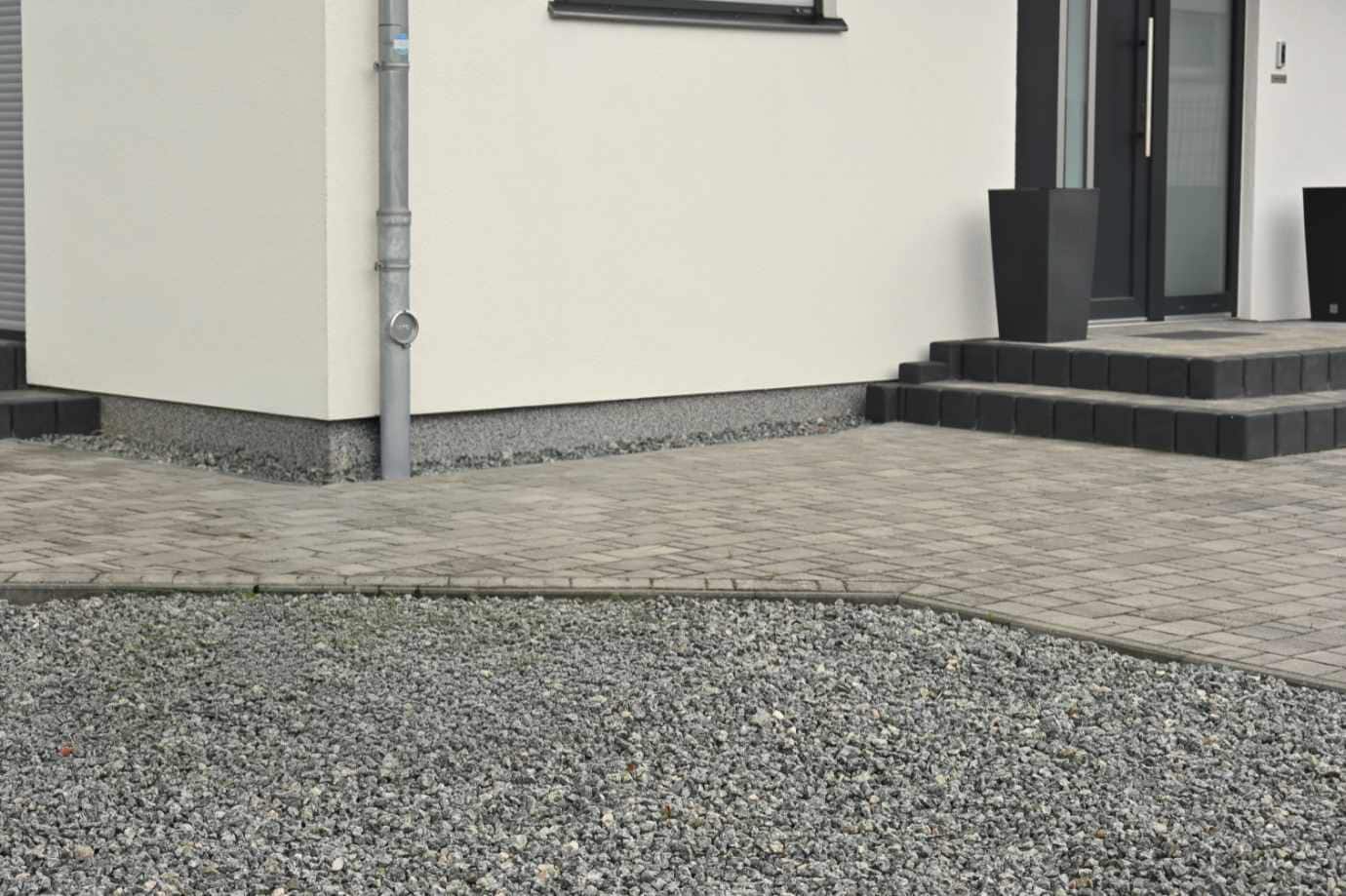
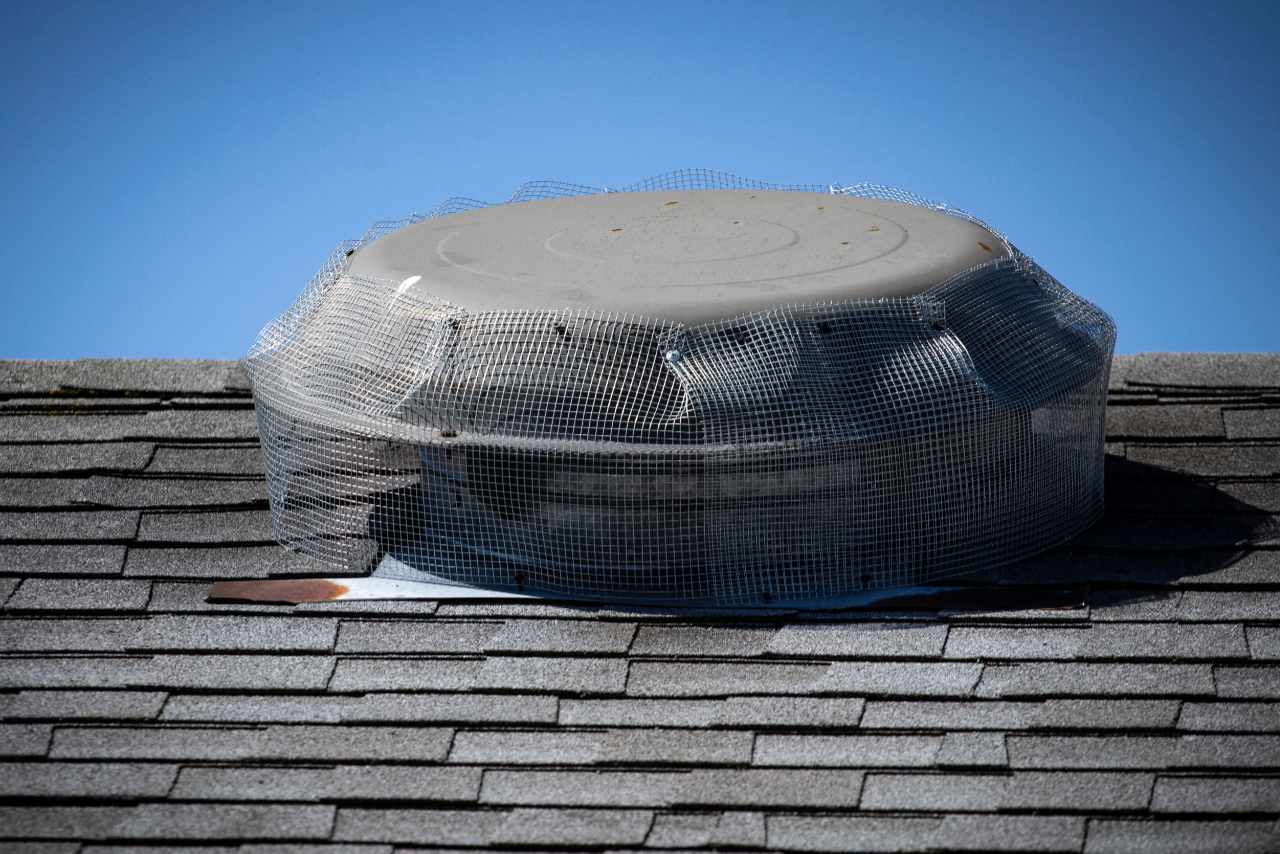
The immediate area stretching up to five feet from your home’s exterior walls is Zone 0, or the Ember-Resistant Zone. In this zone, California regulations require active fuel removal by clearing roof and gutter debris, hardscaping with gravel or stone instead of organic mulch, and installing ⅛-inch mesh over exterior vents.
ZONE 1: 5-30 FEET
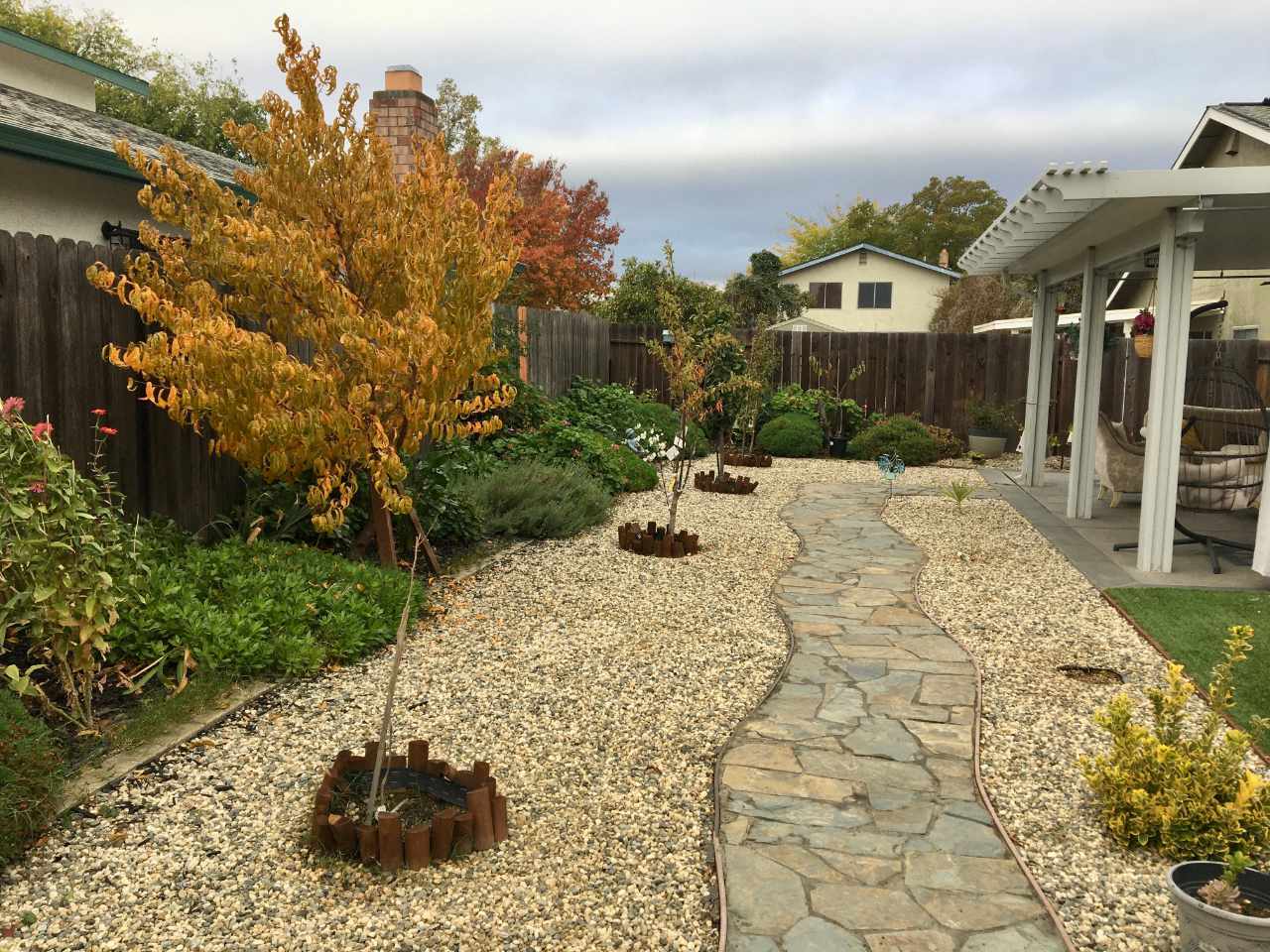
Extending five to 30 feet from your home, Zone 1 is designated as the Lean, Clean, and Green Zone. State law mandates removing all dead plants, leaves, and pine needles within this perimeter to eliminate ground fuel and trimming tree branches up to six feet from the ground to eliminate ladder fuels. Homeowners must also maintain adequate spacing between trees and shrubs.
ZONE 2: 30-100 FEET
Zone 2, or the Reduce Fuel Zone, extends from 30 to 100 feet from your home or to your property line. California regulations mandate reducing vegetation in this area by keeping grass mowed to a maximum height of four inches, clearing dead trees, brush, and fallen limbs, and maintaining sufficient spacing between tree canopies and shrubs. Additionally, state law requires creating a minimum 10-foot cleared perimeter around all exposed woodpiles, outbuildings, and stored combustible materials.
Home hardening: Pairing passive space with active defenses
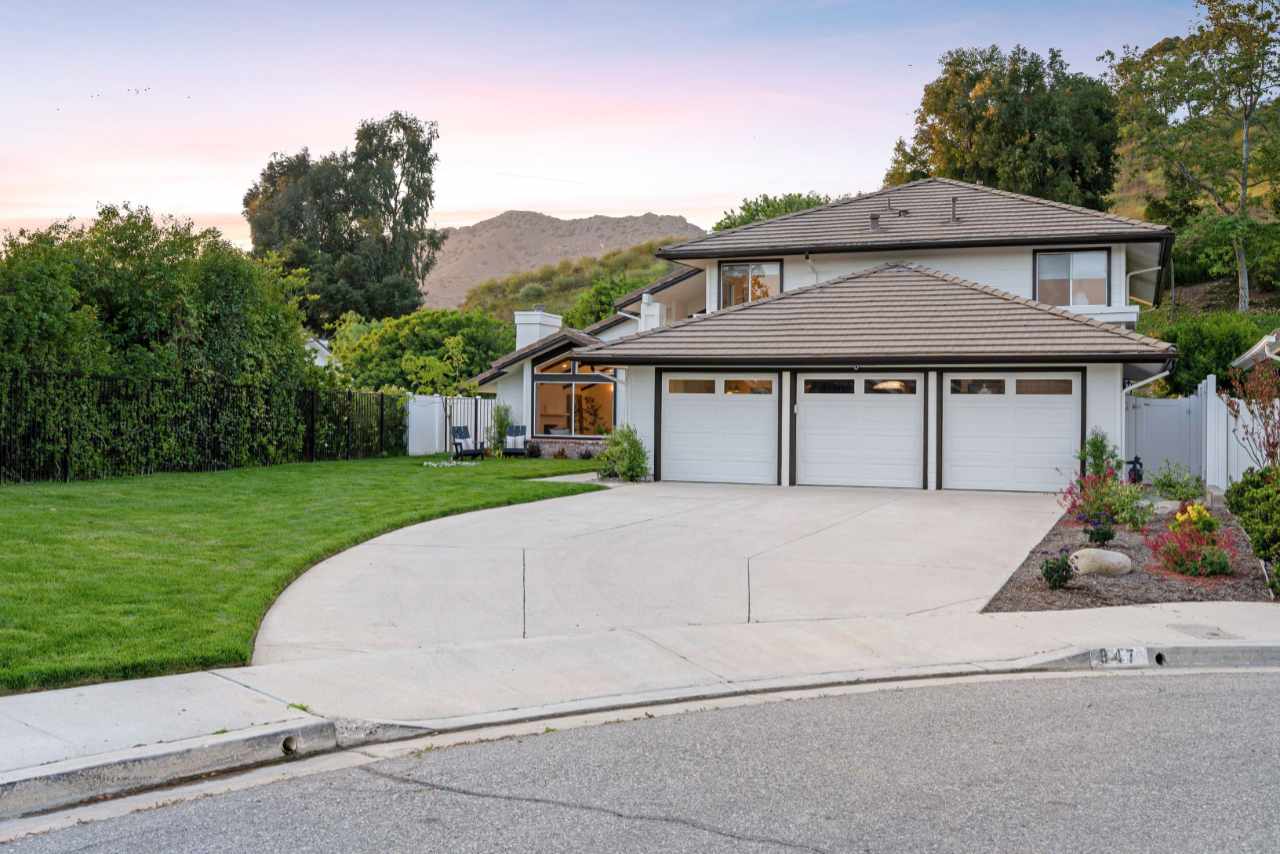
Passive home hardening protects walls and roofs, but it can’t shield non-attached combustibles like patio furniture, hot tub covers, and wood fencing. Adding an active defense system addresses these unavoidable ignition risks by automatically monitoring wildfires and saturating your property with water and foam before embers arrive.
PASSIVE HARDENING BARRIERS
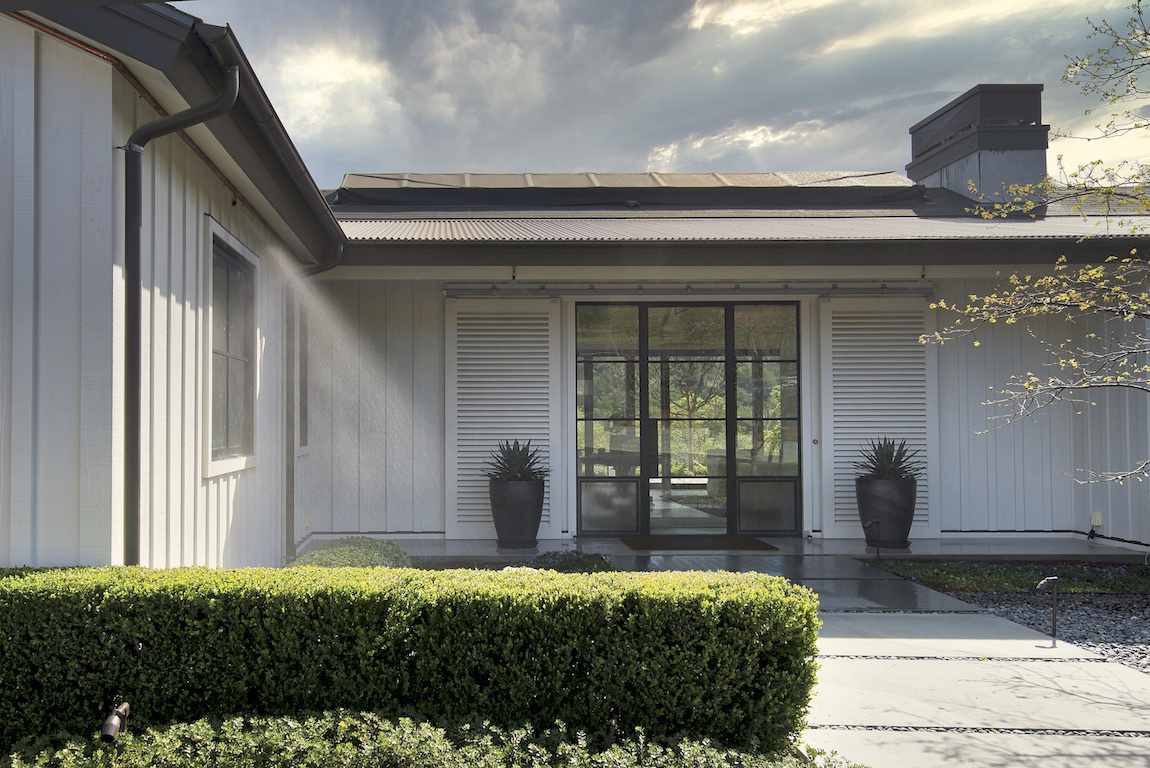
Passive hardening consists of permanent structural upgrades designed to withstand intense heat and prevent embers from penetrating the home. Upgrades can range from inexpensive weekend projects, such as covering exterior vents with ⅛-inch metal mesh and installing metal gutters with ember guards, to larger home renovation projects.
More substantial improvements include enclosing vulnerable eaves and soffits, installing Class A-rated roofing, and upgrading to dual-pane tempered glass windows with sealed exterior doors. Combustible siding, decks, and porches can also be replaced with fire-resistant materials like stucco, fiber cement, or masonry.
ACTIVE DEFENSE INTEGRATION
While home hardening creates a strong protective baseline, everyday life naturally introduces combustible materials into defensible space. Cars parked in driveways, patio furniture, toys, and seasonal decorations all become ignition hazards if left behind during a fast-moving evacuation.
Active defense bridges this gap. By combining real-time fire intelligence with automated wildfire sprinklers, the Frontline system saturates the home ignition zone with water and biodegradable foam before embers arrive, protecting both the structure and the everyday items surrounding it.
How defensible space impacts your homeowners insurance
California government agencies created the Safer from Wildfires framework to educate homeowners and encourage them to harden their homes. Making recommended improvements may qualify you for insurance premium discounts or rate credits.
Each insurer in the state treats wildfire defense strategies differently. Homeowners in vulnerable areas, particularly in the WUI, may increase their eligibility for commercial coverage while reducing premium costs. The specifics are always changing, which is why it’s important to seek the latest information on wildfire insurance.
Preparing for a CAL FIRE defensible space inspection
Getting ready for a California defensible space inspection is a valuable opportunity to find and fix wildfire risks. A self-audit ensures you’re ready before you receive an inspection notice. More importantly, it helps you prepare your home for a wildfire. Walk through your property with a defensible space inspection checklist to see your home like a fire professional would and identify ways to improve its fire resilience.

CHECKLIST FOR CALIFORNIA DEFENSIBLE SPACE INSPECTIONS
You don’t have to be an expert on the California 100-foot defensible space rule. The checklist below will help you prepare for a defensible space inspection and better protect your home.
1. Preparing Zone 0 defensible space (0-5 feet):
- Clean gutters and clear debris, such as fallen leaves and dead vegetation.
- Trim plants, shrubs, and tree branches so they’re not touching your walls or overhanging your roof.
- Store firewood, patio furniture, propane tanks, and other material as far from your structure as possible.
- Clear areas around decks, porches, and stairs.
- If possible, create a noncombustible border around your foundation using fire-resistant materials such as gravel, stone pavers, or concrete rather than wood mulch.
2. Preparing Zone 1 defensible space (5-30 feet):
- Remove dry and dead vegetation, like fallen leaves and pine needles.
- Water and trim grass and plants to keep them green.
- Remove or thin closely planted trees and shrubs to create space between them and slow fire spread.
- Remove lower branches from trees to prevent potential fire ladders.
- Separate spans of grass with gravel or concrete walkways to eliminate a continuous path for fire spread.
3. Preparing Zone 2 defensible space (30-100 feet):
- Remove dead or aging trees and branches.
- Clear brush, particularly on slopes.
- Keep grass mowed lower than four inches.
- Ensure ample space between trees and shrubs.
- Keep a clear area around combustible materials.
- Consider using fire-resistant materials for non-attached structures such as sheds and fences.
THE IMPORTANCE OF DEFENSIBLE SPACE INSPECTIONS WHEN SELLING YOUR HOME
Home sellers must document that their property has undergone a defensible space inspection and meets wildfire safety requirements. Assembly Bill 38 disclosures make risks clear to buyers before they purchase a home. If issues identified during the inspection remain unaddressed, the buyer and seller may make an agreement as to who will be responsible for completing the changes and documenting compliance.
A more proactive approach is to make defensible space landscaping improvements before listing your home. You’ll avoid delays, unexpected costs, failed contracts, and potential insurance problems.
Frequently asked questions.
Zone 0 requirements were established by Assembly Bill 3074, which was signed into law in 2020. Although requirements for existing homes vary by location, many major cities are currently setting a compliance deadline of February 2027. However, you don’t have to wait until then to start creating an ember-resistant zone that reduces the risk of losing your home to a wildfire.
Violations, such as failing to clear pine needles from roofs and gutters or leaving dead vegetation within Zone 0, start with a $100 to $500 fine for a first offense. A second violation escalates fines to $250 or more. A third violation carries a minimum $500 fine, along with assessed costs for correcting the problem. You may also risk having your insurance canceled.
Avoiding fines should not be your primary motivation for PRC 4291 compliance. Reducing wildfire risks and potentially qualifying for insurance incentives are stronger reasons to take action.
California rules establish only minimum defensible space requirements. Fire risks vary across the state, so fire authorities in higher-risk WUI areas may have stricter standards. For example, San Diego County requires 50 feet of clearance in Zone 1. Check with your local fire department and town to find out what additional rules may apply to your property.
If your property boundaries fall inside the 100-foot perimeter specified by the rule, you’ll still need to create and maintain a defensible space up to your property line. You’re only legally responsible for the space you own and control.
State fire safety rules supersede HOA rules. A HOA cannot prohibit you from complying with defensible space rules. HOAs are generally responsible for common areas, community landscaping, and keeping continuous foundations and walls clear. As a homeowner, you’re typically responsible for outdoor areas where you have exclusive use, such as patios and balconies. Getting involved with your HOA to promote and establish a firewise community benefits all owners.

Go beyond defensible space with Frontline’s active wildfire defense system
Creating a defensible space around your home and incorporating passive defense strategies is a good start. Yet, even the most well-maintained property is vulnerable to wind-driven embers.
Active protection effectively reduces the risk of ember ignition. Frontline’s automated wildfire defense system monitors conditions and responds when danger approaches, continuing to operate even after you evacuate. The system applies a mixture of water and non-toxic, biodegradable foam to your roof and surrounding property to help prevent embers from starting a fire. During the devastating 2025 wildfires that destroyed entire neighborhoods across the Los Angeles area, 96% of homes protected by Frontline survived*, sustaining only minimal damage.
*Past Results Are Not a Predictor of Future Performance. Based on 2025 Los Angeles wildfire outcomes: 59 of 61 Frontline-protected homes remained intact, though some experienced minor damage. Not all homes were within the official burn perimeter but were in areas at risk from ember exposure or active wildfire conditions. Results may vary. Wildfires are inherently unpredictable and dangerous. Use of the Frontline Wildfire Defense System is not a guarantee against loss of life or property from a wildfire.
p