You wouldn’t toss a plastic container or a lithium-ion battery into your campfire. Whatever they release when they burn, you know you don’t want it in your lungs.
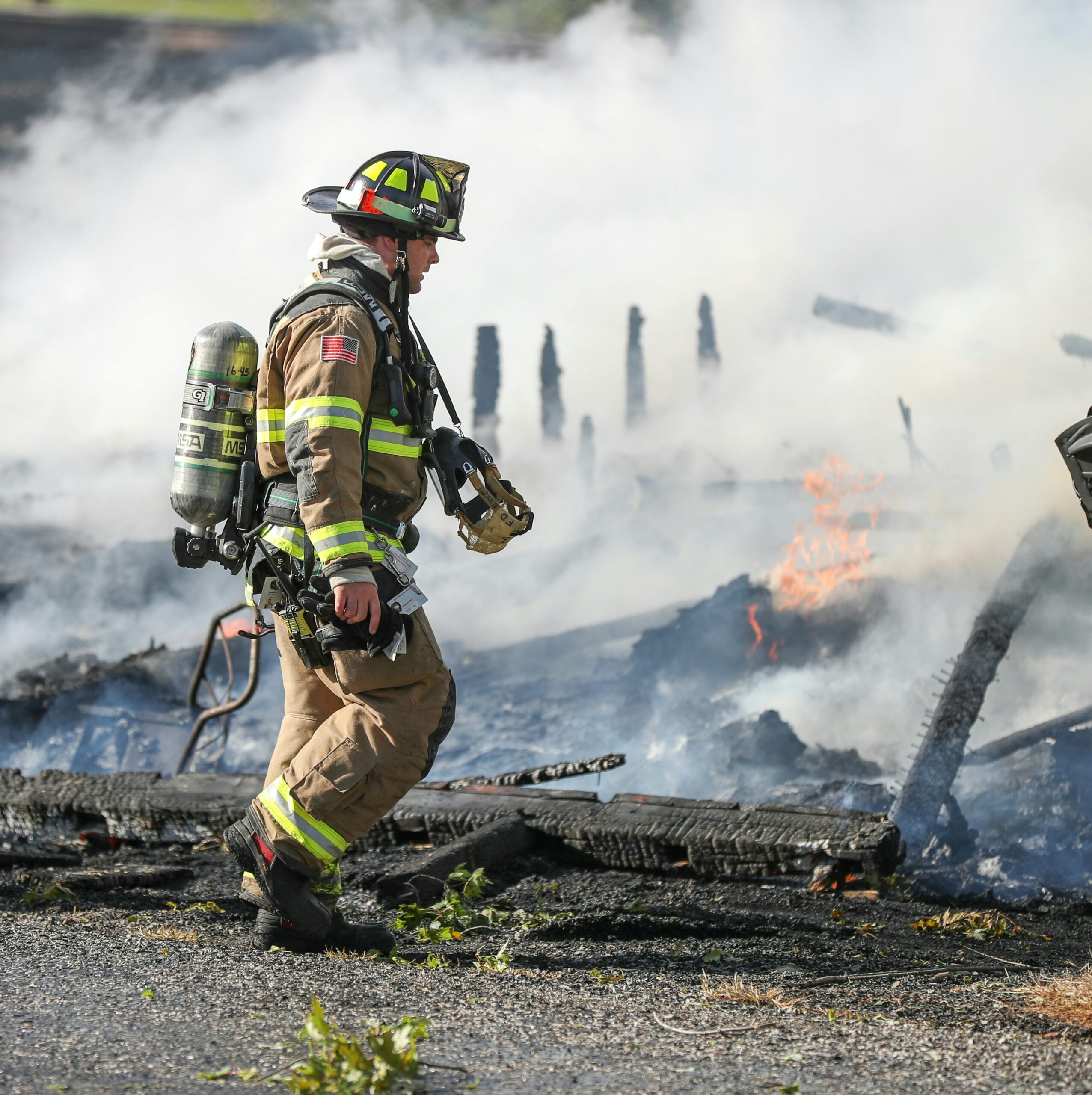
But when wildfire reaches a neighborhood, those materials can become part of the fuel. Trees and underbrush burn alongside insulation, furniture, vehicles and more. With little warning, first responders can find themselves working in the smoke from that mixture.
Wood smoke is already hazardous. New research from Iowa State University shows how adding plastics and batteries changes its chemical makeup, raising further concerns about what firefighters may be exposed to when communities burn.
The findings give us another reason to think about wildfire protection long before the first ember falls: Protecting our communities means protecting our first responders, too. Protecting our communities means avoiding ignition of the built environment.
What’s burning matters
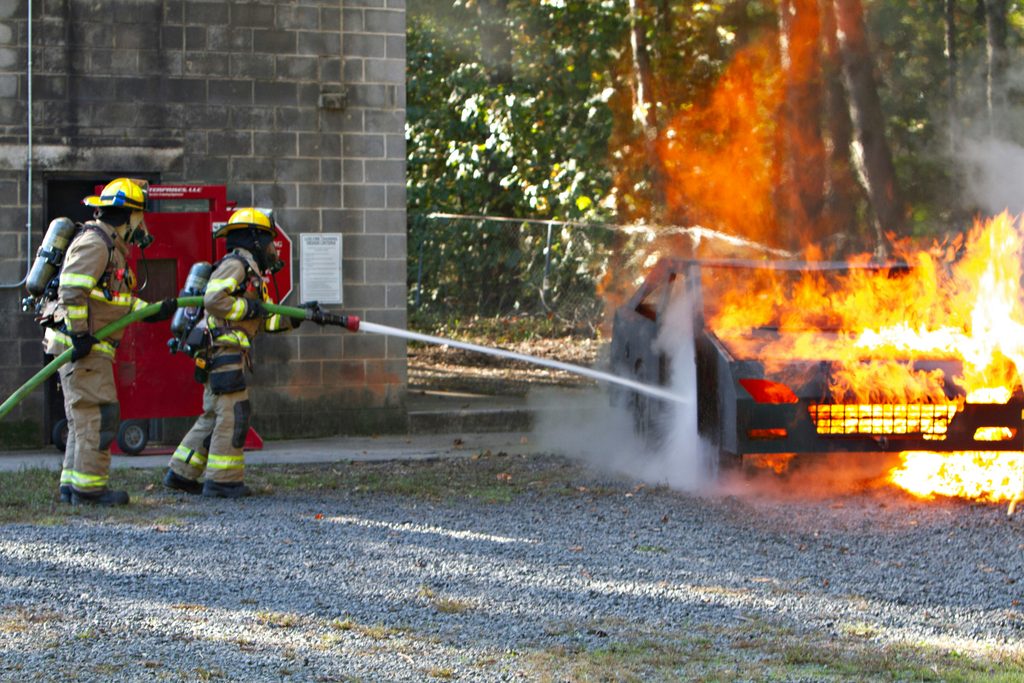
In a study published in March 2026 in Frontiers in Public Health, researchers compared smoke from four combinations of fuel: pine alone, pine with polystyrene, pine with a lithium-ion battery, and all three together.
These controlled laboratory fires represented a small slice of the materials that can burn where homes and wildlands meet. Pine represented vegetation. Polystyrene, used in products such as foam insulation and packaging, represented synthetic materials. The researchers used a nickel-rich battery chemistry found in some electric vehicles and consumer electronics.
Each experimental fire burned for 30 minutes under identical heat and oxygen conditions. Researchers measured the particles produced and examined their chemical makeup.
Adding plastic and batteries changed both the amount of particulate pollution and what it contained. Burning all three materials together produced about 3.3 times the particle mass of pine alone. In the pine-and-battery tests, concentrations of particle-bound trace elements rose more than nineteenfold.
For firefighters, the concern goes beyond simply how much smoke is in the air. What that smoke carries matters, too.
Different fuels, different hazards
The battery-containing fires released particles carrying metals such as nickel, cobalt, lithium and aluminum. Plastic added another layer of concern: even a small amount of polystyrene significantly increased levels of polycyclic aromatic hydrocarbons, or PAHs, a group of chemicals that includes known carcinogens. That matters because there is no single measurement that captures everything firefighters may encounter in smoke.
What is burning influences both how much pollution is produced and what that pollution contains.
Small particles, substantial concerns
The study also found that many of the particles produced were extremely small — small enough to travel deep into the lungs.
Those tiny particles do not weigh very much, even when there are enormous numbers of them. That means measuring smoke only by the total weight of particles in the air can miss part of the picture.
Taken together, the findings suggest that smoke from a neighborhood fire can be more complicated than smoke from vegetation alone. Particle size, chemical makeup and the mix of materials burning all help determine what first responders may be breathing.
The health stakes are already established
The broader connection between firefighting and cancer is well documented.
In 2022, the International Agency for Research on Cancer, the World Health Organization’s cancer agency, classified occupational exposure as a firefighter as carcinogenic to humans. Its assessment found sufficient evidence that those exposures cause mesothelioma and bladder cancer. The long-term consequences of complex disaster exposures were made clear following the World Trade Center response as well. Today, nearly 50,000 first responders and survivors have been diagnosed with 9/11-linked cancers.
That conclusion reflects the complex exposures firefighters encounter throughout their work, including substances entering the body through inhalation, skin contact and ingestion.
Outside a home can still mean inside its smoke
A firefighter does not have to enter a burning building to encounter hazardous combustion products.
In a separate study of controlled residential fires, researchers measured hazardous airborne concentrations around firefighters performing exterior ventilation. Some hydrogen cyanide measurements exceeded the threshold considered immediately dangerous to life or health.
Outdoor pollution levels were highest downwind and where ground-level smoke was heaviest. The researchers emphasized respiratory protection during exterior ventilation and placing command operations upwind.
These measurements demonstrate that airborne hazards can extend beyond a building’s walls and into areas where crews are working.
The respiratory protection available to crews also varies widely. Firefighters entering burning buildings use SCBA, whereas wildland firefighters generally work without that equipment. Its weight, bulk and limited air supply make it impractical for extended operations across dynamic terrain.
Some crews use respirators, but protection depends on the equipment. A properly fitted particulate respirator can reduce exposure to smoke particles without protecting against hazardous gases. That leaves an important gap when wildland crews encounter smoke from burning homes, vehicles and other manufactured materials. Working outdoors does not mean having clean air to breathe.
An incomplete fuel picture leaves everyone underprepared
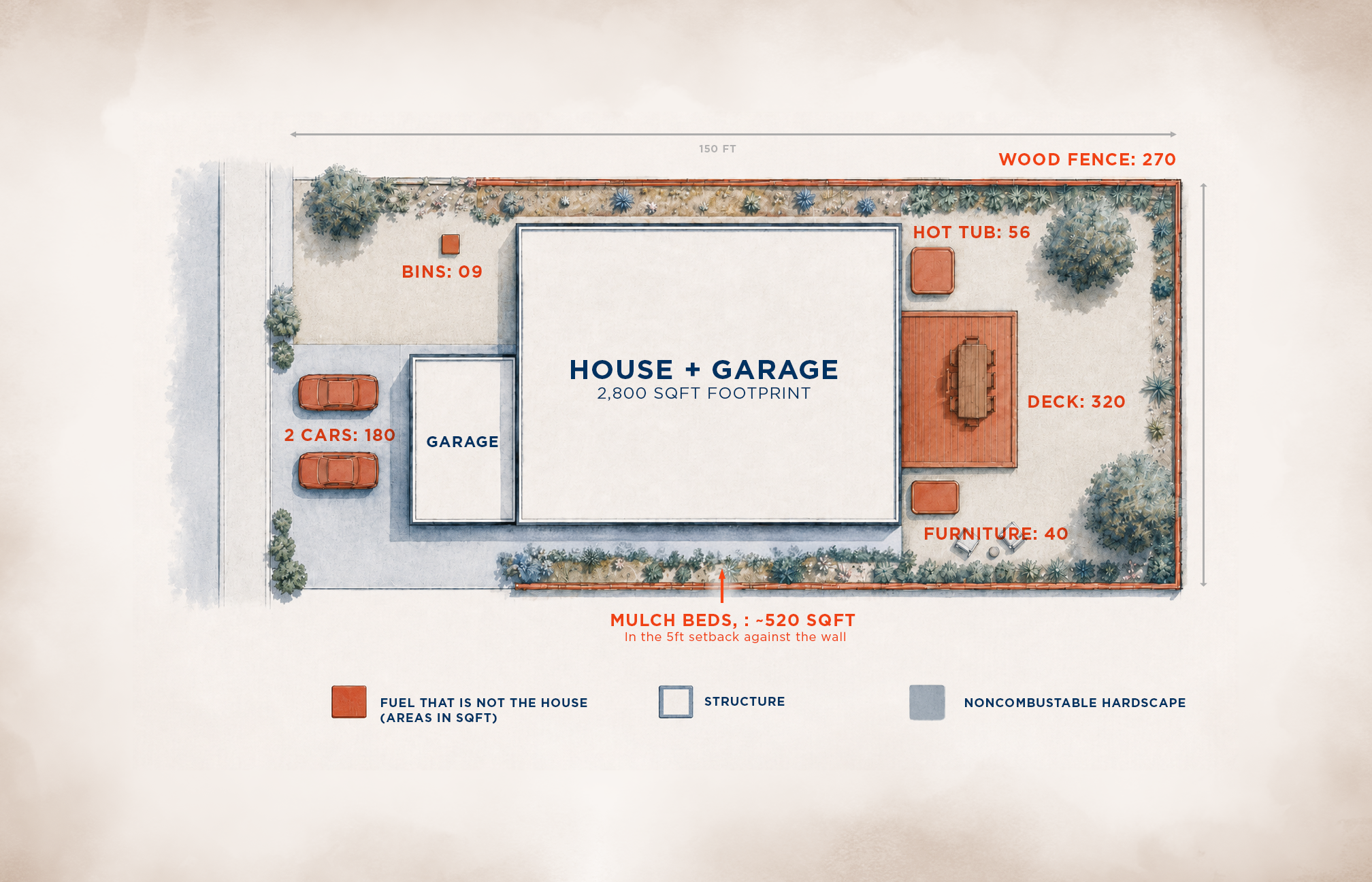
Current approaches to wildfire risk assessment and mitigation still underestimate the full fuel package around homes — and the exposures it can produce. Fences, decks, sheds and their contents, outdoor furniture, parked vehicles, batteries and even deliveries left by the door all contribute to that fuel load. When they ignite, they add to the smoke surrounding the people working to protect those homes.
These materials are especially consequential close to buildings. In CAL FIRE’s defensible space framework, Zone 0 covers the first 5 feet, while Zone 1 extends out to 30 feet.
The challenge is to assess what is actually present in those spaces, including fuels that remain after vegetation has been managed.
The implications are clear: An incomplete fuel picture can leave communities underprepared for the smoke responders may encounter.
Vehicles, sheds and combustible belongings close to a home can all add manufactured materials to that smoke if they ignite.
Passive home hardening remains essential, but it cannot address every fuel that may be present around a home. The new smoke research adds another reason to look at the full picture: Preventing those materials from burning can also help reduce what responders are exposed to.
The Friction Between Public Defense and Private Assets
Wildfire risk sits at the intersection of two distinct markets. In the private market, insurers, mortgage holders, and homeowners are focused primarily on preserving physical structures and property value. In the public market, firefighters, water utilities, and public planners focus on life safety, resource management, and long-term health.
Confusion arises when the private market relies on public assets to protect private homes. This leads to the expectation that firefighters will defend structures built with toxic modern materials. But firefighters cannot be everywhere simultaneously, and historical strategies have relied on a flawed assumption: that we can simply scale up public response to outpace a wildfire.
Investing in mitigation without measuring its true effectiveness relies on hope, or waiting for the wind to stop blowing. Meanwhile, the public cost goes unmeasured: sending thousands of firefighters into neighborhoods burning with plastics and batteries, only to track their health decades later when cancer rates spike. Without a feedback loop that measures true effectiveness, both sides lose.
Protection starts before the response
Reducing those risks requires looking at the whole property.
Defensible space guidance already addresses many combustible belongings, alongside vegetation. Moving or removing those fuels is important. So is understanding what remains and what those materials can add to the smoke if they burn.
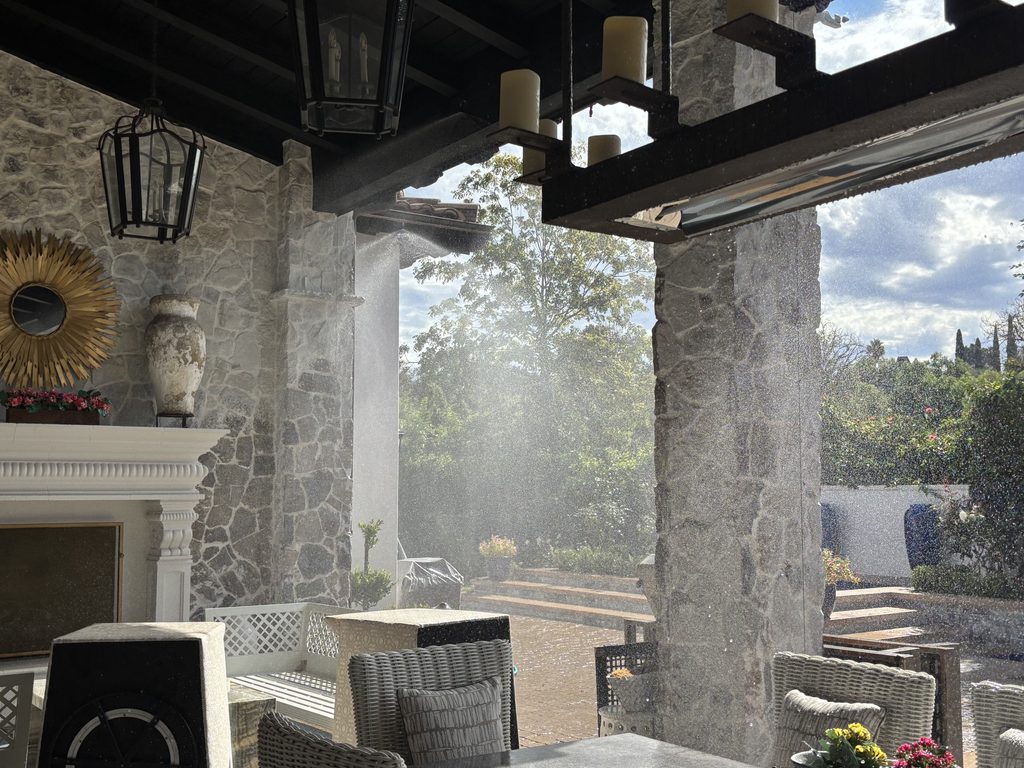
Active exterior protection, such as Frontline’s wildfire defense system, adds a responsive layer designed to wet the home and surrounding areas to help prevent ember ignition. It complements home hardening and fuel reduction.
Keeping a home from igniting also keeps its contents from becoming another source of smoke. Fewer burning structures — and fewer manufactured materials burning with them — can mean fewer pollutants added to the air around firefighters, residents and neighboring properties.
Protecting a community means preparing for what can actually burn — and thinking not only about what the fire may destroy, but also about what it may put into the air. Firefighter health and air quality belong in that conversation from the beginning.
More from the Frontline Blog
All Posts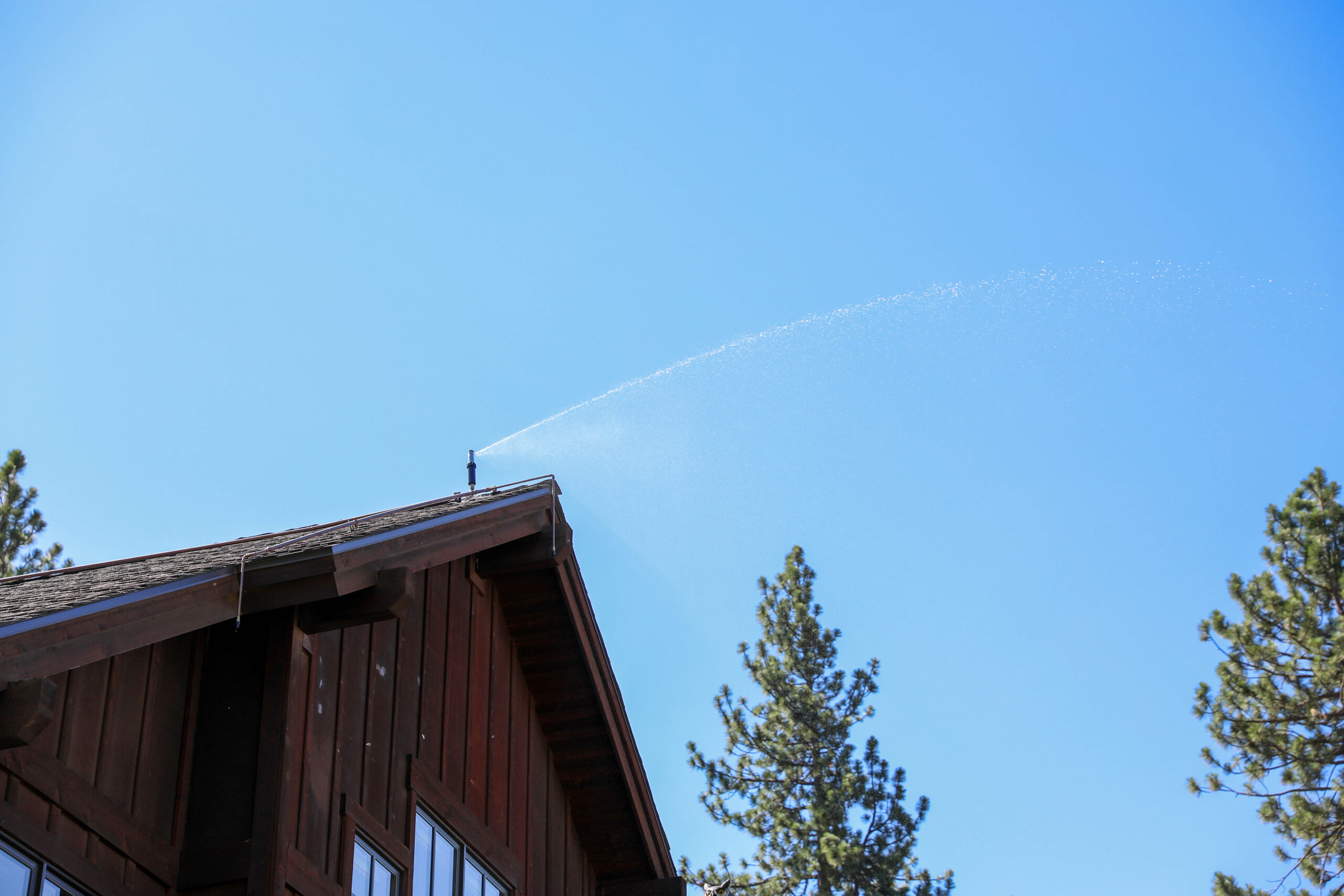
When living in a wildfire-prone region, protecting what matters most requires more than just standard preparation. Golden Bear Solar...
A Massive Gap in Passive Structure Hardening Virtually every wildfire expert agrees that wind-driven embers are the primary threat...

Every homeowner’s journey with Frontline begins with a conversation. For many, that conversation comes after experiencing a wildfire firsthand,...